
Aruba Weather by Month: Temps, Rain, Wind, Sea
Aruba weather by month from a host who lives there: highs, lows, rain, wind and sea temperature for all 12 months, plus what each month costs and when to book.
 By Ghislaine de Windt, your host in Noord · 6 min read · Updated October 2026
Aruba weather by month is a short story: it is warm every day, the wind blows every day, and the rain shows up for a few weeks at the end of the year. Ghislaine has lived in Noord through enough of them to know the real differences, which are smaller than most guides suggest and matter more for price than for comfort. Here is the full year in one table, then what each month actually feels like and costs.
Aruba weather by month: the table
Temperatures are averages at the airport. Rain figures are long term monthly means and vary a lot from year to year; a wet November can double the number and a dry one can halve it. Sea temperatures are for the west coast beaches.
| Month | High | Low | Rain | Wind | Sea | Notes |
|---|---|---|---|---|---|---|
| January | 85 F | 77 F | about 1.5 in | strong, 20 mph | 79 F | Peak season, high rates |
| February | 86 F | 77 F | about 0.8 in | strong | 79 F | Driest, busiest, Carnival |
| March | 87 F | 78 F | under 0.5 in | strong | 79 F | Spring break crowds |
| April | 88 F | 79 F | under 0.5 in | strong | 79 F | Rates ease after Easter |
| May | 89 F | 80 F | about 0.6 in | steady | 81 F | Quiet, dry, our favorite |
| June | 89 F | 80 F | about 0.8 in | strongest | 81 F | Windy, summer families start |
| July | 89 F | 80 F | about 1 in | steady | 81 F | School holidays, mid rates |
| August | 90 F | 81 F | about 1 in | easing | 82 F | Hottest, calmer sea |
| September | 90 F | 81 F | about 1.5 in | lightest | 83 F | Quietest month, humid days |
| October | 89 F | 80 F | about 3 in | light | 83 F | Rain starts, low rates |
| November | 88 F | 79 F | about 3.5 in | light | 82 F | Wettest month, still sunny |
| December | 86 F | 78 F | about 3 in | picking up | 81 F | Rates jump mid month |
Two things stand out. The temperature barely moves: five degrees between the coolest and warmest month. And the wettest month on Aruba still has less rain than an average month in Miami. The island gets roughly 18 inches a year in total.
What does the weather feel like in each month?
January and February. The trade wind is at full strength, which keeps the heat down and the afternoon sea a little choppy on Eagle Beach. Mornings are glassy. These are the driest, sunniest, most expensive weeks of the year, and Carnival fills the streets in February. Book six months out.
March and April. Still dry and breezy, slightly warmer. Spring break brings US college groups to Palm Beach for two or three weeks in March; Eagle Beach and the north stay calm. Easter week is busy, then rates drop noticeably from mid April.
May. Ghislaine’s answer when guests ask for the best month. Dry, warm, the wind still steady, the sea warming up, the high season crowd gone. Rates are a third below February.
June, July and August. The hottest months, with highs around 90 F, but June is the windiest month of the year and the breeze makes the beach comfortable. The wind eases through August, which makes the water calmer for snorkeling at Arashi and Boca Catalina. European and American school holidays bring families, so the weeks are busier than May but rates stay mid range.
September and October. The wind drops to its lightest, which is the only time the island feels humid, mostly in the late afternoon. The sea is at its warmest and flattest. Showers begin in October, usually at night or early morning, clearing by breakfast. These are the quietest months and the cheapest, and most guests who come then come back.
November. The wettest month on the long term average, though that still means mostly sunny days with a shower that passes in twenty minutes. The island turns green for a few weeks, which is a sight on its own. Thanksgiving week is the first busy spike of winter.
December. Rain tapers through the month and the wind returns. The first two weeks are quiet; from around December 15 rates double, minimum stays stretch to a week, and Christmas and New Year are the hardest nights of the year to book. Our best time to visit guide has the booking calendar.
Does Aruba get hurricanes?
Rarely. The island sits at about 12 degrees north, below the track of nearly all Atlantic storms. The season runs June 1 to November 30, and in most years Aruba sees nothing more than a few days of cloud and gusts when a system passes far to the north, sometimes with a swell on the west coast. Direct hits are a once in decades event. We do not block any part of the year for it and our cancellation terms do not change in those months.
What about sargassum?
The west coast beaches, from Arashi down to Eagle Beach, face away from the Atlantic and almost never get seaweed. The east and south coasts can get it between roughly April and September in a bad year, which occasionally reaches Baby Beach. If you are planning a south coast day in summer, check recent photos first.
Wind, sun and the sea
The trade wind blows from the east northeast almost every day, averaging 15 to 20 mph, strongest from December to July and lightest in September and October. It is the reason Aruba feels cooler than its latitude and the reason you will burn without noticing. The UV index sits at very high to extreme all year; reef safe sunscreen is required by law and the homes have a bottle for your first morning.
Sea temperature runs 79 to 83 F year round, warm enough to swim in any month, and visibility for snorkeling is best in the calm months of August through October. Our snorkeling guide explains where.
What each month costs
As a rough guide, using our own calendar:
- Highest: December 15 to around April 15. Rates at their peak, seven night minimums over the holidays.
- Middle: late April to August, plus Thanksgiving week.
- Lowest: September to early December, often 30 to 40 percent under high season, with shorter minimum stays.
Flights follow the same curve. The best value weeks of the year for a vacation rental are late April, May, early June, and October. The weather in those weeks is, honestly, the same weather.
Stay nearby
Every month works. Ocean View 2BR on the Palm Beach strip is the choice if you want the breeze and the restaurants on foot. Oasis Hideaway in Gold Coast has a private pool for the still September afternoons. Hideout Dream Big Suite and Hideout Happiness Suite near Eagle Beach are adults only and a short walk from the calmest morning water on the island. See them at /stays/.
Questions people ask
What is the best month to visit Aruba?
For weather alone, March to May: dry, warm, breezy, and after the Christmas rates drop. For value, September and October: the warmest sea, the fewest people and the lowest rates, with a few more showers.
What is the rainy season in Aruba?
October through December, with November usually the wettest month. Even then Aruba averages around 18 inches of rain a year, less than most US cities, and showers are short and mostly at night or early morning.
How hot is Aruba in summer?
Daytime highs sit around 88 to 90 F from May to October, with lows around 80 F. The constant trade wind makes it feel cooler than the number; the humid, still days are rare and come in September and October.
Does Aruba have a hurricane season?
The Atlantic season runs June to November but Aruba sits south of the usual storm tracks. Most years the island sees nothing more than a windy, cloudy day when a system passes to the north.
Is the sea warm in Aruba in winter?
Yes. Sea temperature bottoms out around 79 F in February and March and peaks around 83 F in September and October. You can swim comfortably every month of the year.
Stay nearby.
All stays Rooftop pool 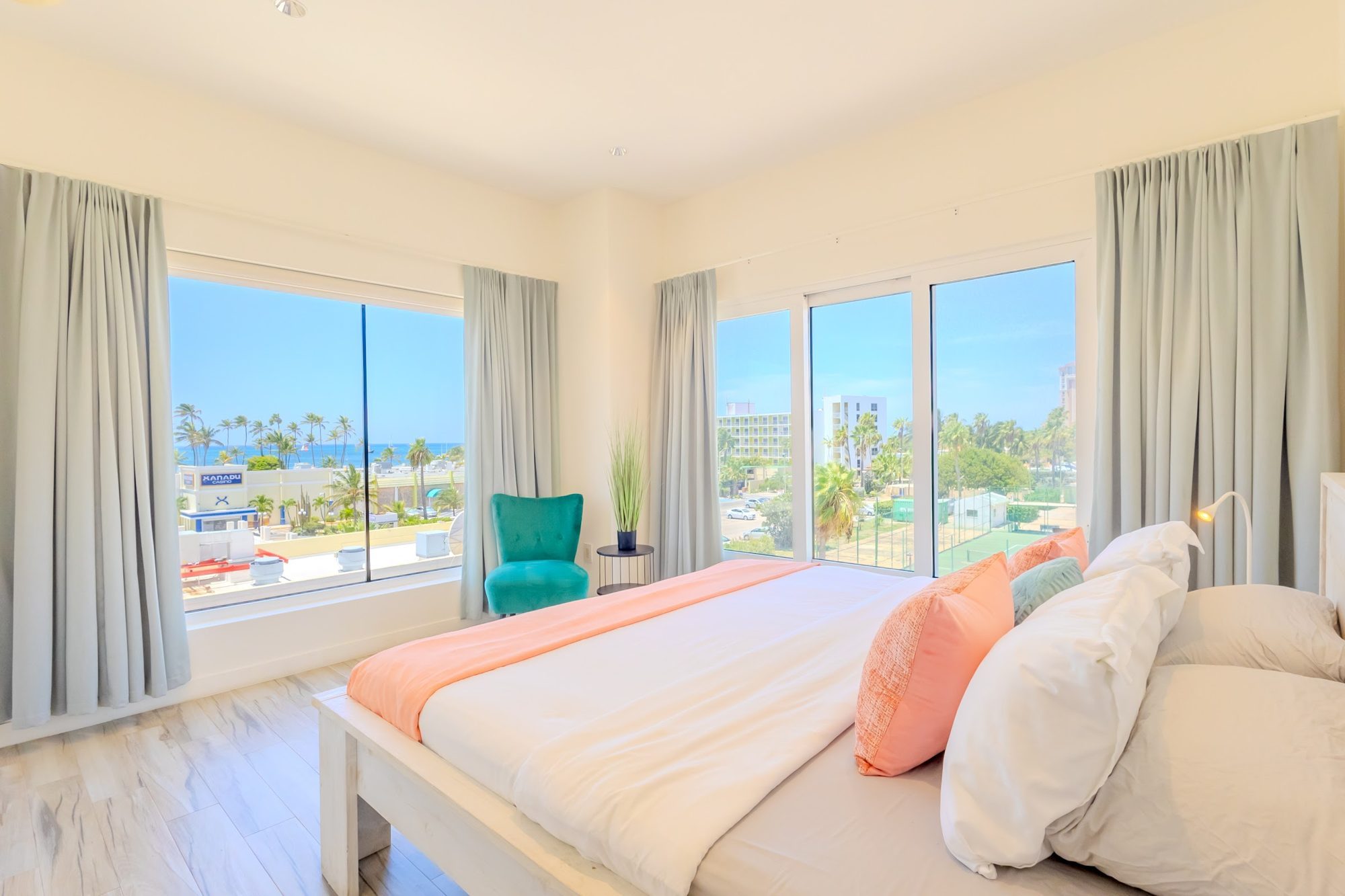
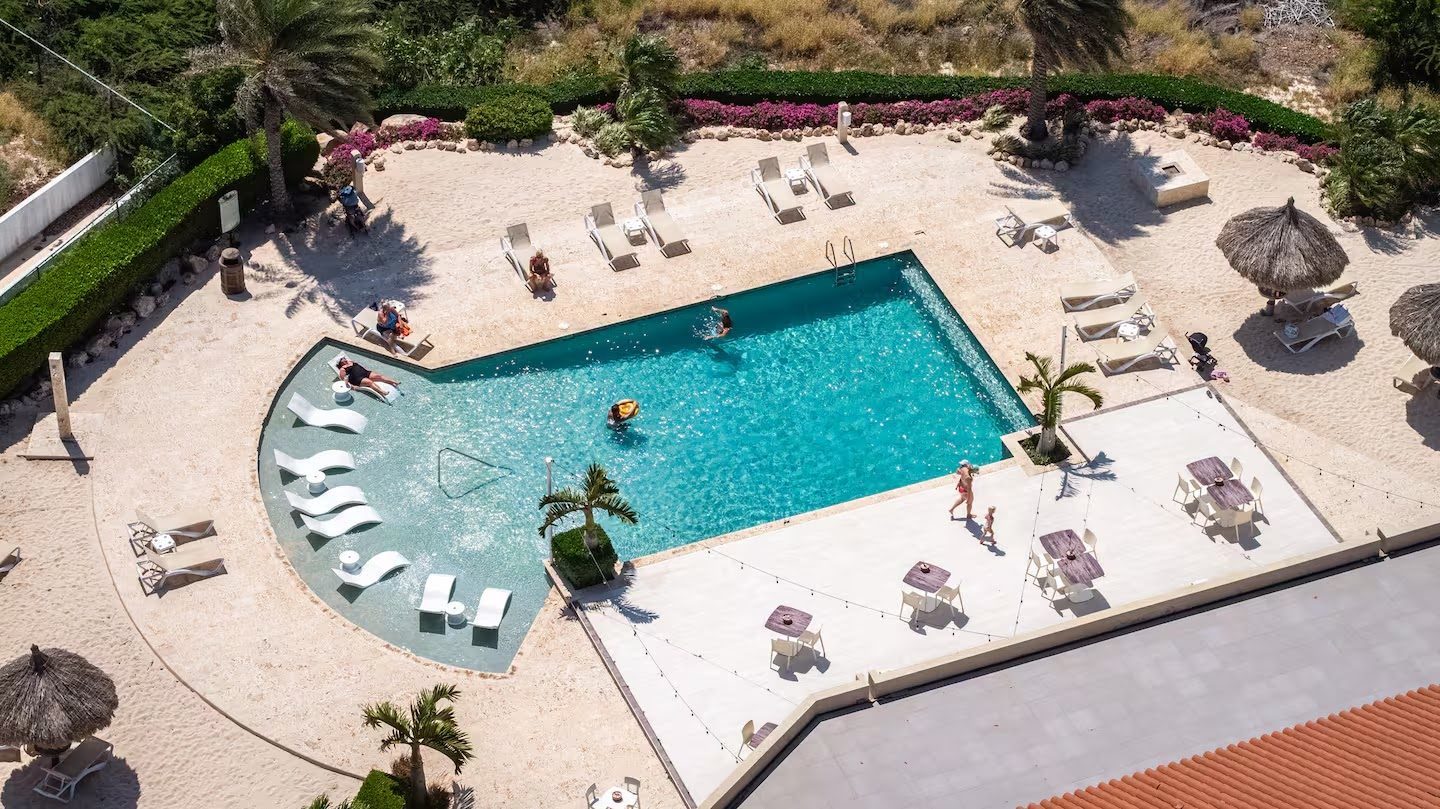
Ocean View 2BR
Sea view from your bed, rooftop pool at The Cove From $210 per night, direct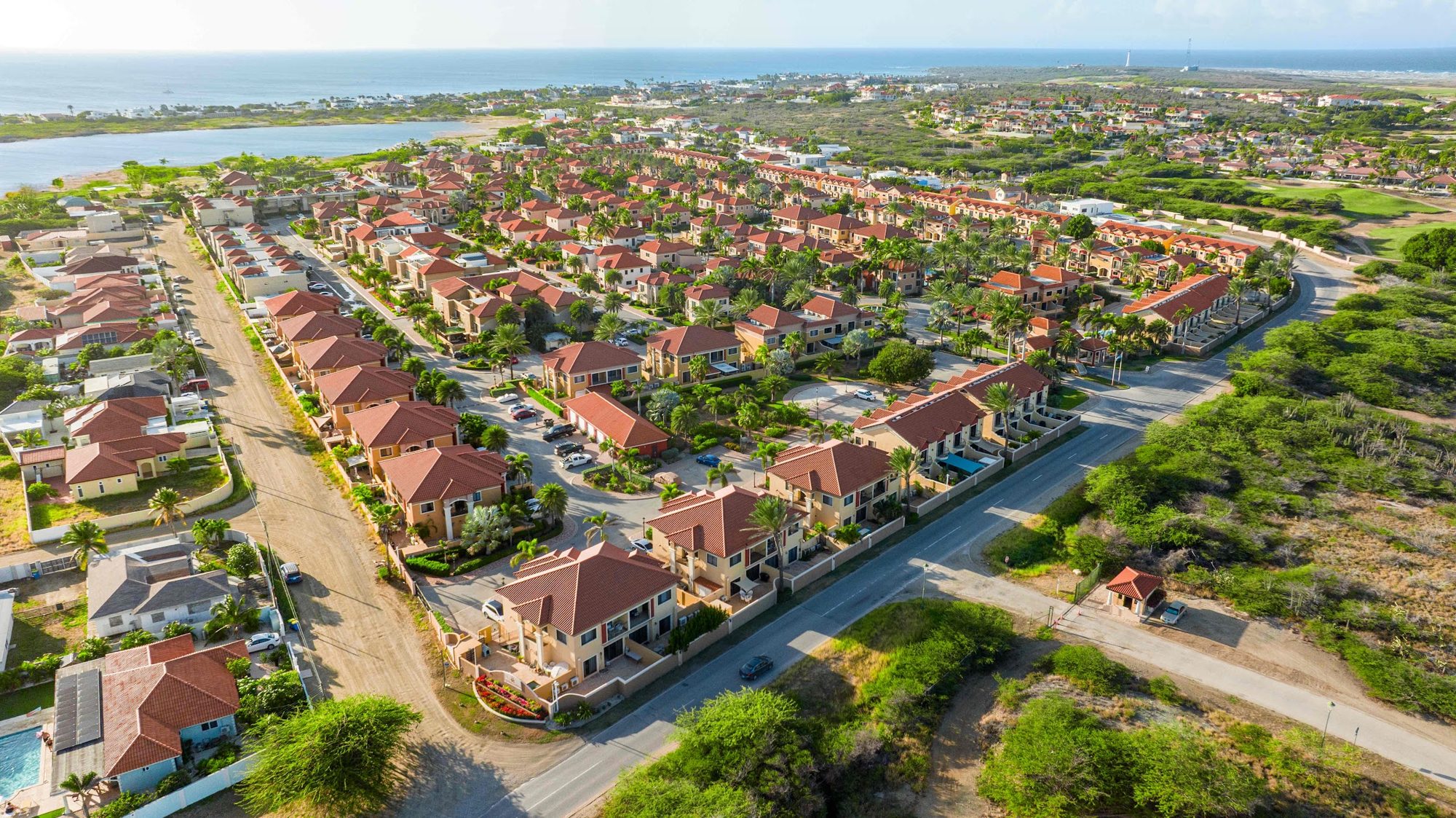 Gated community
Oasis Hideaway
Three pools, gym and tennis inside the gates From $110 per night, direct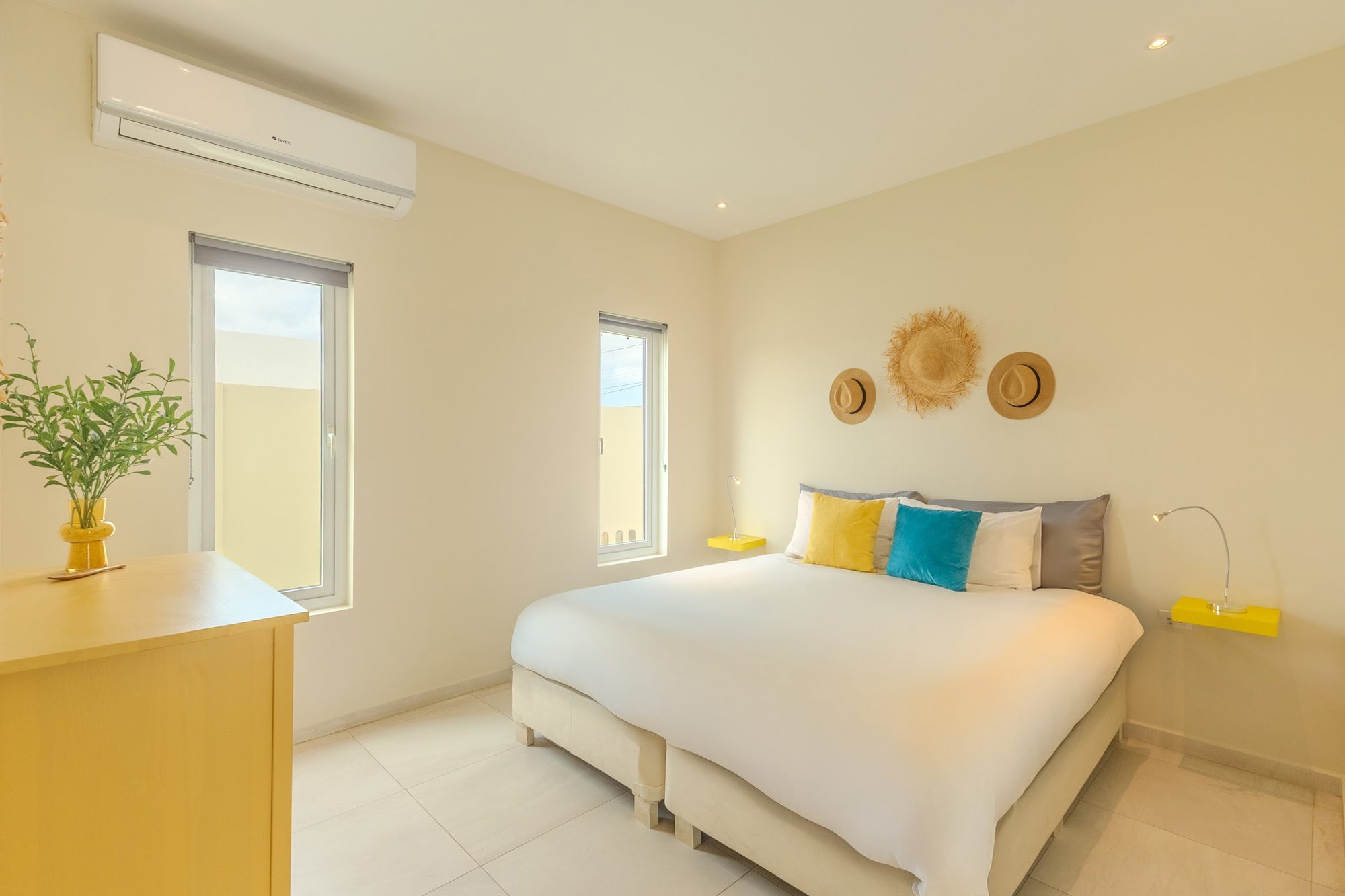 Saltwater pool
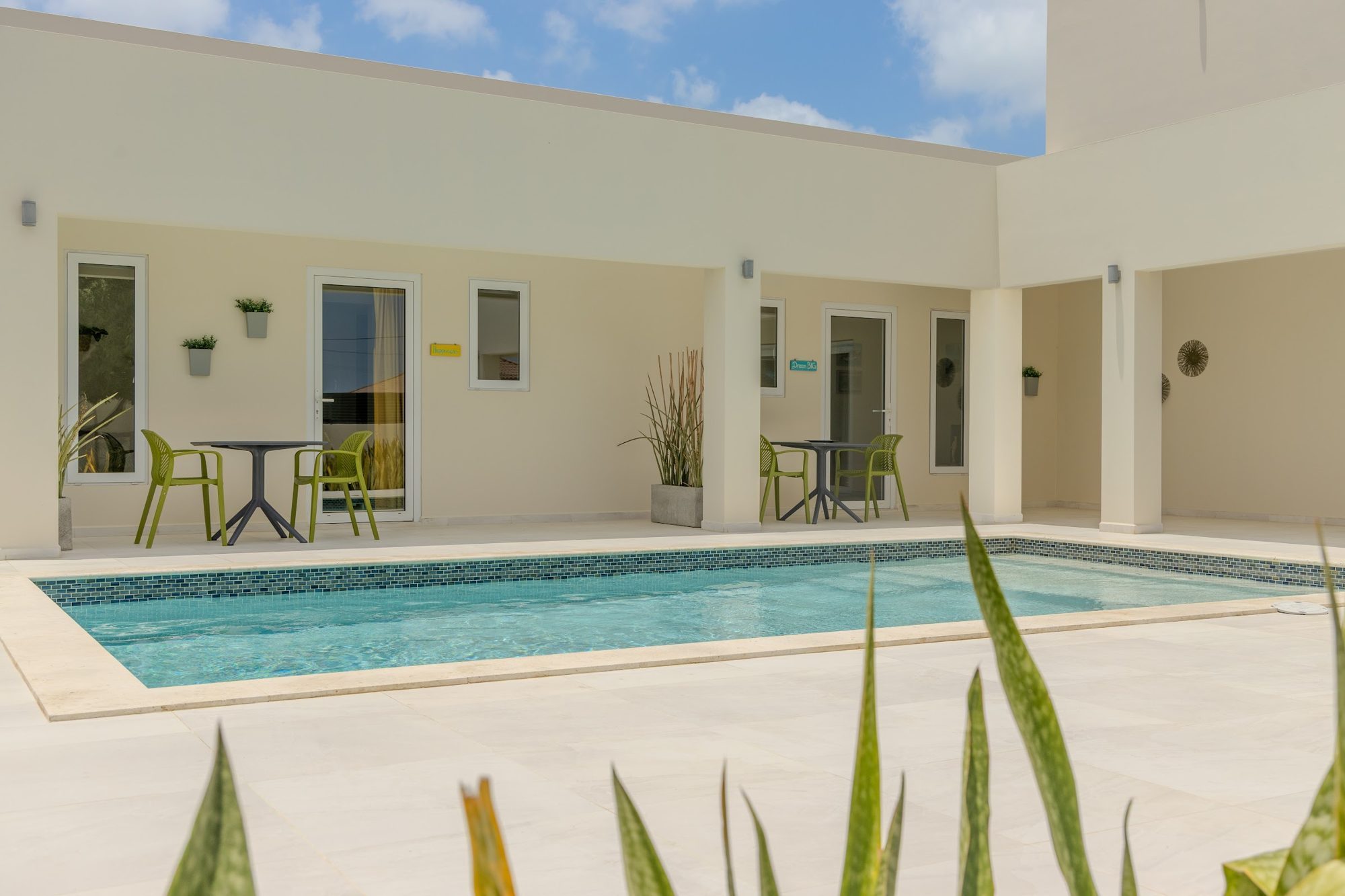
Hideout Dream Big Suite
Adults only, private patio onto the pool garden From $99 per night, direct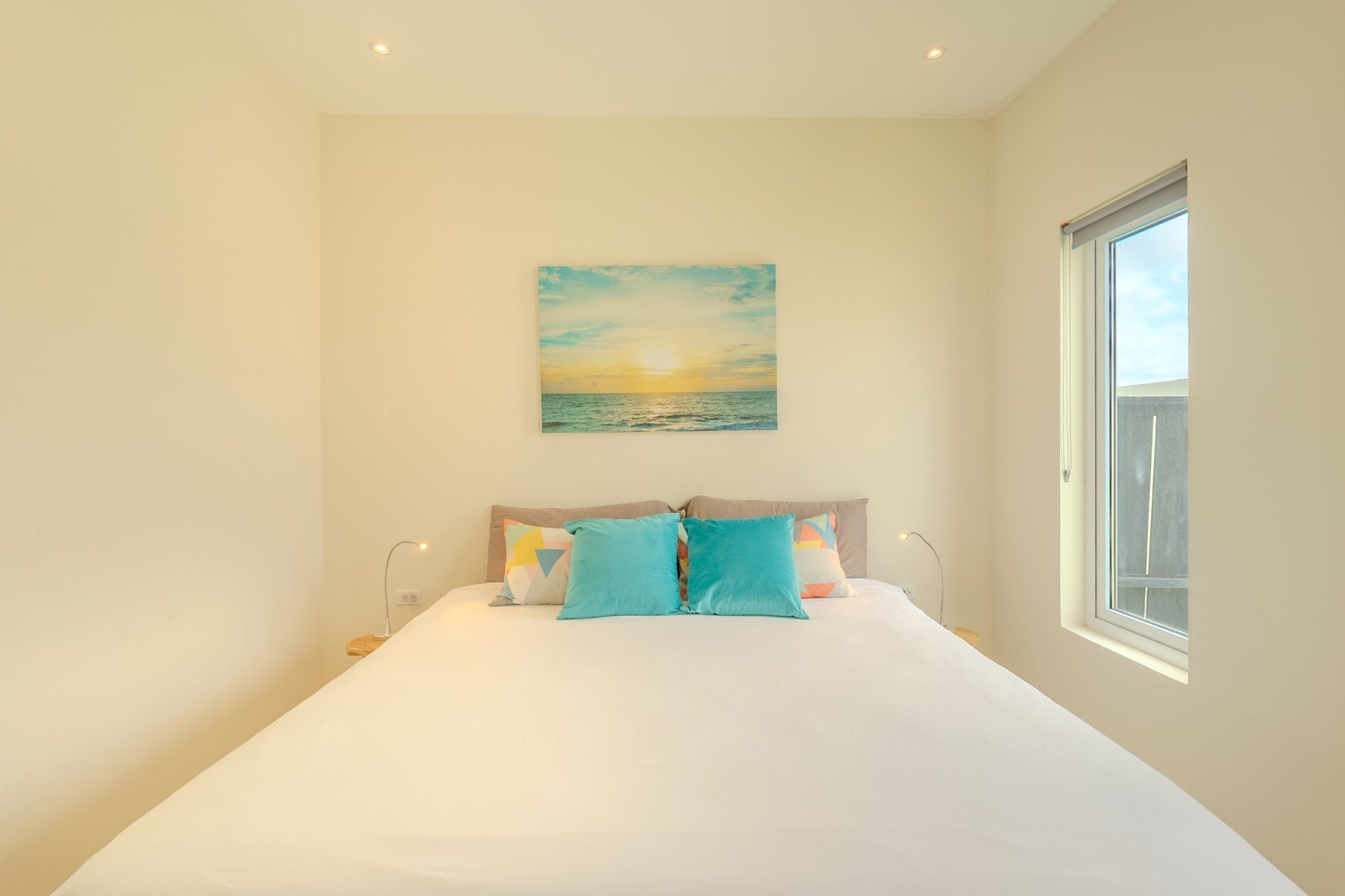 Pool view
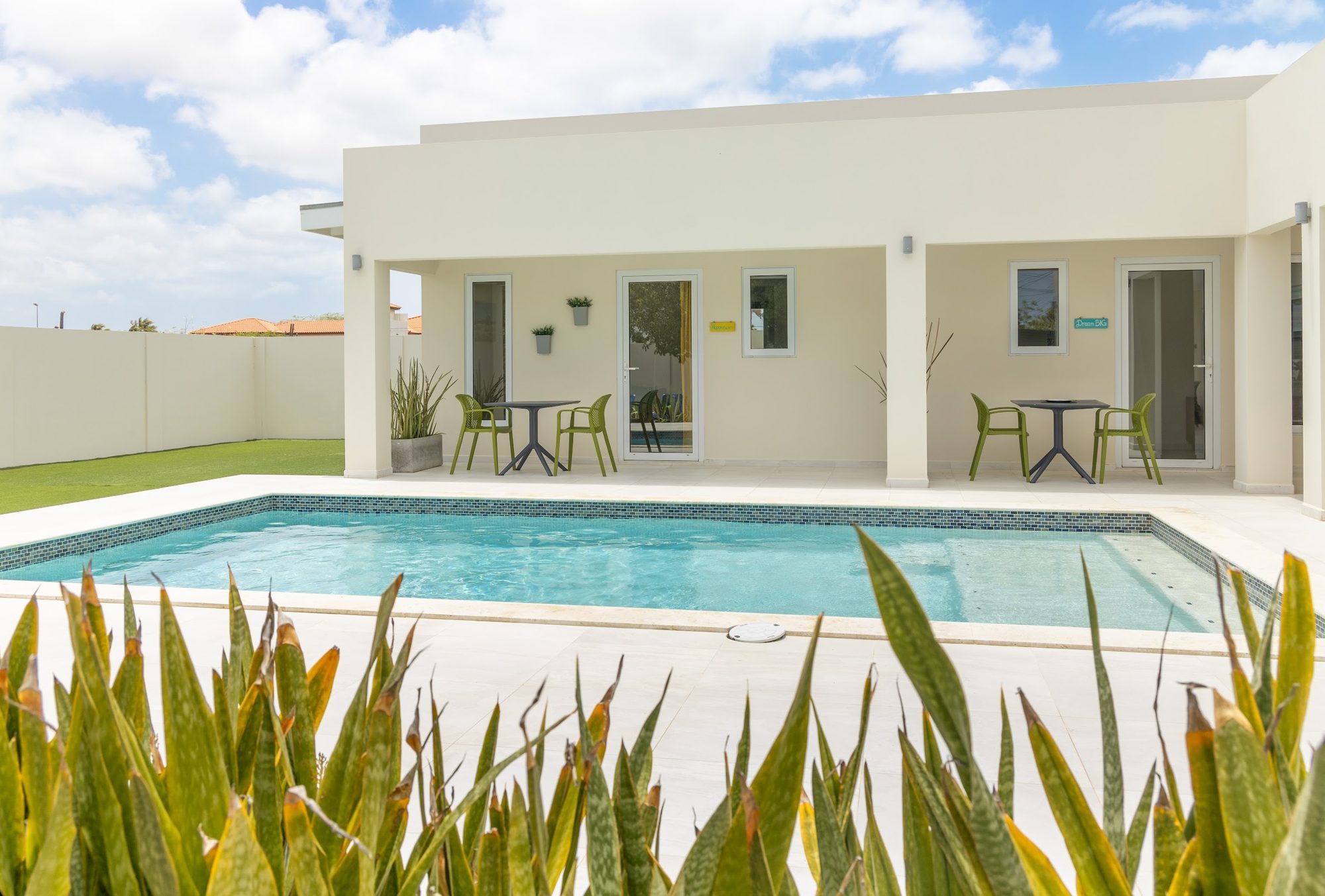
Hideout Happiness Suite
Private patio with pool view From $99 per night, directMore on practical.
Aruba Airport Guide: Arrival, Taxis and US Preclearance
Aruba airport explained by a local host: arrival timing, official taxi rates to Palm Beach and Eagle Beach, rental desks, and why US flights need three hours.
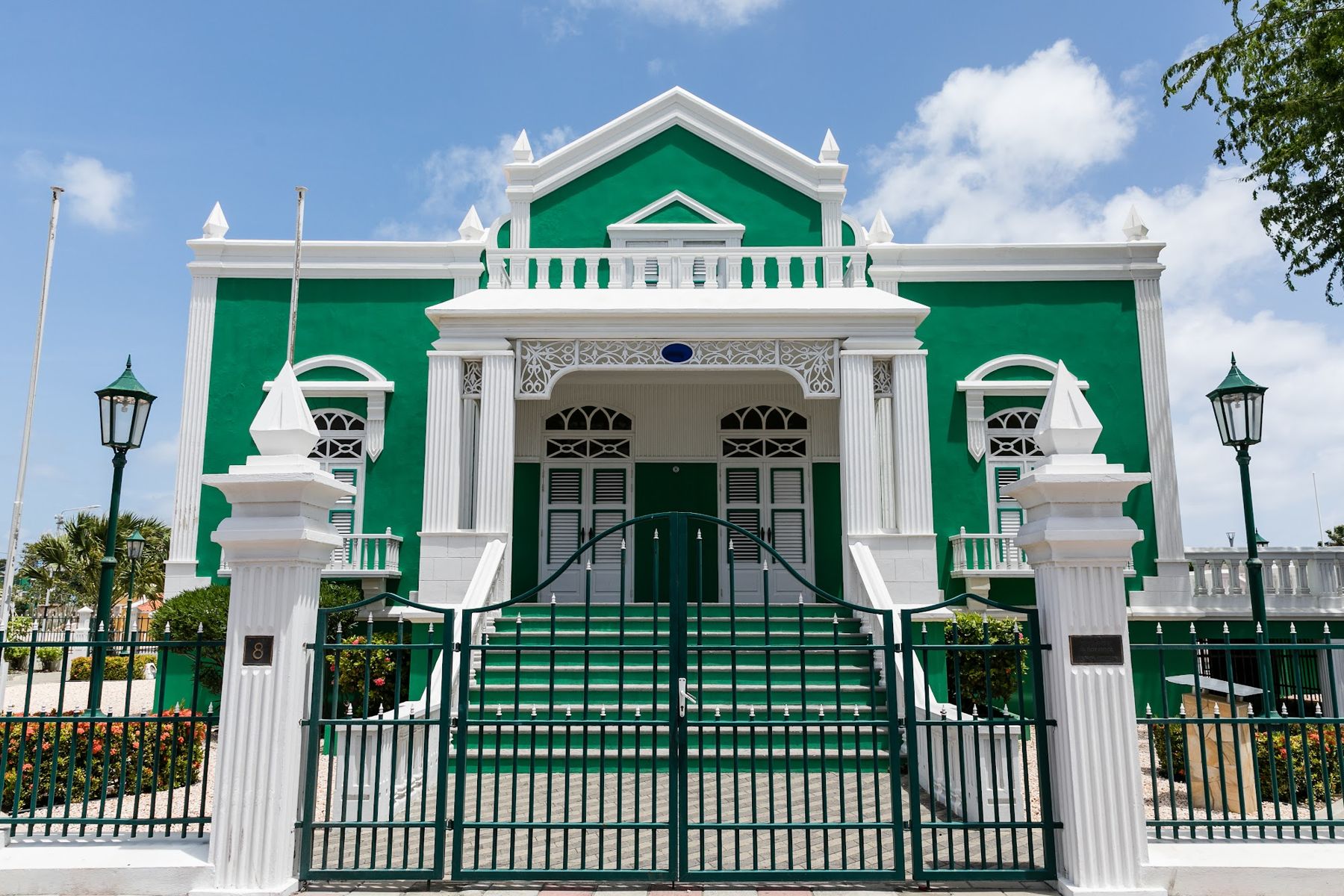
Aruba Cruise Port: Nearest Beaches and a Day Plan
Aruba cruise port guide from a local host: the walk to Surfside Beach, taxi and bus to Eagle Beach and Palm Beach, the free tram and a half day plan that works.
Aruba Currency: Florins, Dollars, Cards and ATMs
Aruba currency explained by a local host: the florin, the fixed 1.79 rate, where US dollars work, cash only places, ATMs, cards, service charges and tipping.