
Aruba Currency: Florins, Dollars, Cards and ATMs
Aruba currency explained by a local host: the florin, the fixed 1.79 rate, where US dollars work, cash only places, ATMs, cards, service charges and tipping.
 By Ghislaine de Windt, your host in Noord · 5 min read · Updated October 2026
Aruba currency is one of the easiest things about the island, which is why the question comes up so often: people expect it to be complicated. Ghislaine lives in Noord, pays in florins at the supermarket and in dollars at the beach bar, and has watched guests overthink it for years. Here is the whole system in five minutes.
What is the Aruba currency?
The Aruban florin, abbreviated Afl or AWG, sometimes still called the guilder. The Central Bank of Aruba pegs it to the US dollar at a fixed rate of 1.79 florins per dollar, a peg that has held since the 1980s. Because the rate never moves, the island runs on both currencies side by side and nobody argues about it.
Notes come in 10, 25, 50, 100 and 200 florins; the current series, with the island’s animals on them, dates from 2019. Coins run from 5 cents to 5 florins, including the square 50 cent piece called a yotin, which is the only souvenir you will get for free.
Can you pay in US dollars in Aruba?
Yes, nearly everywhere. Hotels, restaurants, supermarkets, gas stations, taxis, tour operators and most shops price in both or take dollars at a rate close to the peg. In practice:
- Supermarkets and gas stations usually convert at 1.75, slightly in their favor. Restaurants and shops often use 1.80. Hotels round to 1.75 or 1.80. The difference on a $100 bill is a dollar or two.
- Change often comes back in florins, especially for small amounts. Spend them at the snack bars.
- $50 and $100 bills are refused by many smaller businesses because of counterfeits. Bring twenties and tens.
- Prices on the Palm Beach strip and in the resorts are nearly always shown in dollars. Local places show florins. Divide by 1.79, or by 2 for a fast guess that overestimates.
Euros are not accepted. Dutch and other European guests should bring dollars or use a card; see the note on cards below.
Do you need florins at all?
Not strictly. Ghislaine’s advice for a week: arrive with $200 to $300 in small dollar bills, use a card for everything that takes one, and withdraw florins once if you plan on buses, snack bars or Zeerovers. The Arubus takes cash and prefers florins. A few beach chair vendors and the fish trucks on L.G. Smith Boulevard like cash of either kind.
ATMs and banks in Aruba
ATMs are everywhere: outside the banks in Oranjestad and Noord, at Super Food Plaza, in the Palm Beach Plaza mall, in the airport arrivals hall and in most resort lobbies. Most machines let you choose florins or US dollars. Cards on the Visa, Mastercard, Maestro and Cirrus networks all work. Fees are the usual foreign ATM fees from your own bank plus a small local fee; withdrawing one larger amount beats five small ones.
Banks (Aruba Bank, Caribbean Mercantile Bank, RBC, Banco di Caribe) open roughly 8 am to 4 pm Monday to Friday, which only matters if a machine eats your card. There is no need to exchange money at a bank or a hotel desk.
Cards: what works where
Visa and Mastercard are accepted almost everywhere a visitor spends money. American Express works in the hotels and larger restaurants and is patchy elsewhere. Discover is rare. Contactless and tap to pay have spread across the island, and most terminals ask whether to charge in dollars or florins; choose florins and let your own bank convert, which avoids the worse rate baked into dynamic currency conversion.
Cash only, or mostly: snack bars and pastechi windows, food trucks, Zeerovers in Savaneta, some beach vendors, the bus, the Donkey Sanctuary donation box, and the occasional small restaurant in San Nicolas. Call your bank before you travel; a declined card at a gas station on a Sunday is the money problem we actually see.
Tipping in Aruba
The one thing to learn: many restaurants add a service charge of 10 to 15 percent to the bill. Some print it clearly, some do not. Look before you tip.
- Service charge on the bill: leave a few dollars extra if the service was good. Nobody expects another 15 percent.
- No service charge: 15 to 20 percent is normal, the same as the US.
- Taxis: fares are fixed by law; round up or add a couple of dollars for help with bags.
- Tour guides and boat crews: $5 to $10 per person for a half day is appreciated.
- Housekeeping in hotels: a few dollars a day. In a vacation rental the cleaning fee covers it; a tip for the cleaner at the end is kind, not required.
- Beach chair vendors and the pastechi window: no.
Our restaurant guide flags the places with service charges.
Taxes and fees you will meet
- A $20 sustainability fee per visitor, paid online with the ED card before arrival. Our entry guide walks through it.
- Hotel and vacation rental taxes and levies are usually included in the quoted price on booking sites; check the breakdown before you pay.
- Restaurant prices usually include the local turnover taxes, so the menu price plus the service charge is the bill.
- If you carry more than $11,000 or 20,000 florins in cash in or out, you must declare it. Nobody does this on vacation, but the rule exists.
Are prices in Aruba high?
Yes, on the strip. Almost everything is imported, and the Palm Beach resorts set the ceiling. The gap closes fast in Noord, Savaneta and San Nicolas and at the supermarket. The is Aruba expensive guide has a line by line week for a couple and a family.
The host’s one page summary
Bring small dollar bills and a Visa or Mastercard. Do not exchange money. Take florins from an ATM once if you want the local places. Read every restaurant bill for the service charge. Tip the boat crew. Keep a yotin.
Stay nearby
All four homes have a safe for your cash and cards, a supermarket within ten minutes and a host who can tell you which places take what. Ocean View 2BR is on the Palm Beach strip, Oasis Hideaway is in Gold Coast near Arashi, and the Hideout Dream Big Suite and Hideout Happiness Suite are near Eagle Beach, adults only. See them at /stays/.
Questions people ask
What currency does Aruba use?
The Aruban florin, written Afl or AWG. It is pegged to the US dollar at 1.79 florins per dollar and has been for decades, so prices do not move with exchange rates.
Can you use US dollars in Aruba?
Yes, almost everywhere: hotels, restaurants, supermarkets, taxis, gas stations and tour desks all take dollars. You will often get florins as change. Some places refuse $50 and $100 bills, so bring twenties.
Should I exchange money before going to Aruba?
No. Bring US dollars in small bills and a card. If you want florins for the snack bars and buses, take them out of an ATM on the island; most dispense both currencies.
How much do you tip in Aruba?
Check the bill first: many restaurants add a 10 to 15 percent service charge. If it is there, a few dollars extra for good service is enough. If it is not, 15 to 20 percent is normal. Round up taxis; tip tour guides and housekeeping a few dollars a day.
Do credit cards work in Aruba?
Visa and Mastercard work almost everywhere, Amex in most hotels and larger restaurants. Snack bars, food trucks, Zeerovers, some beach vendors and the bus are cash only. Tell your bank you are traveling.
Stay nearby.
All stays Rooftop pool 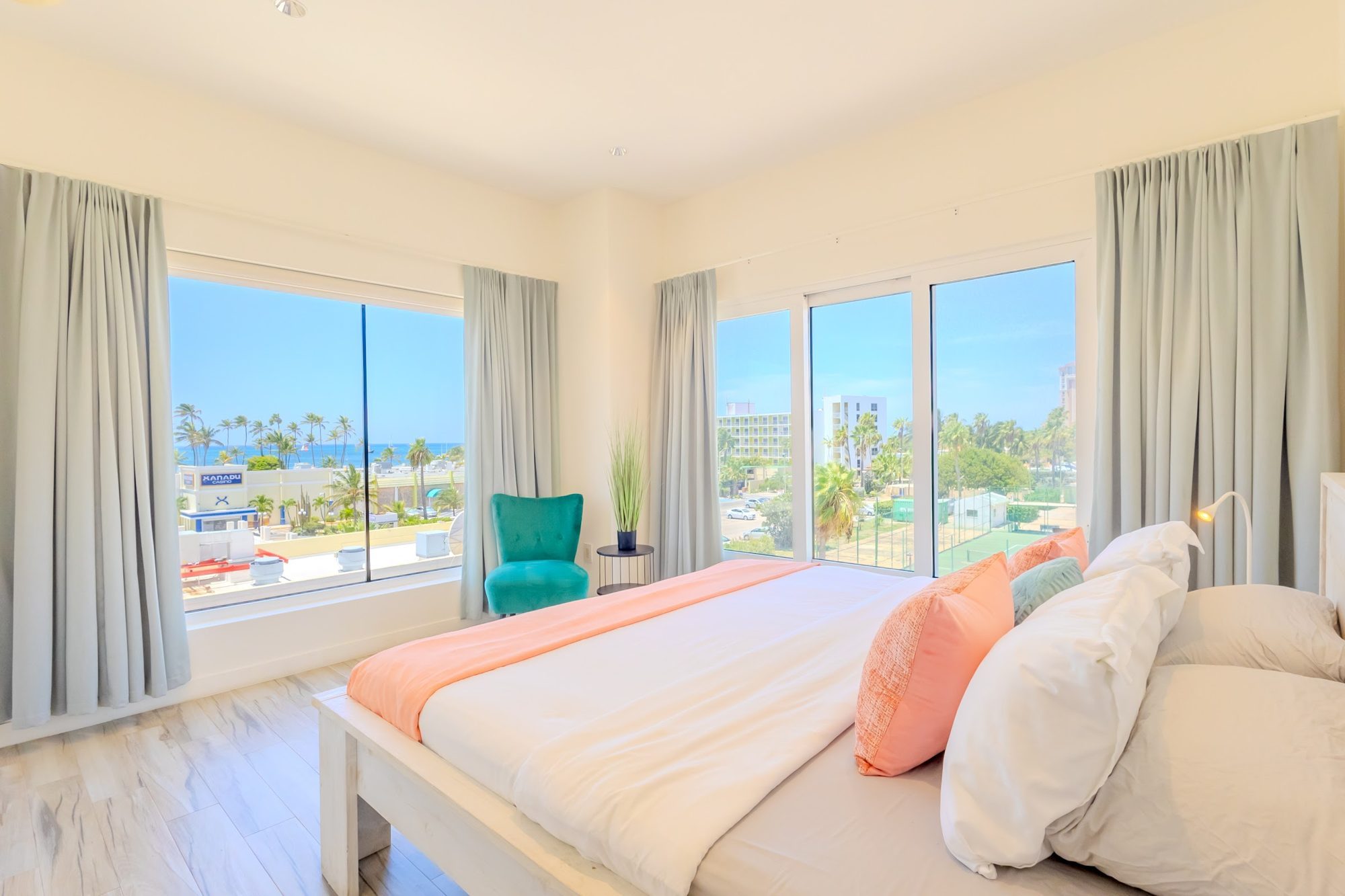
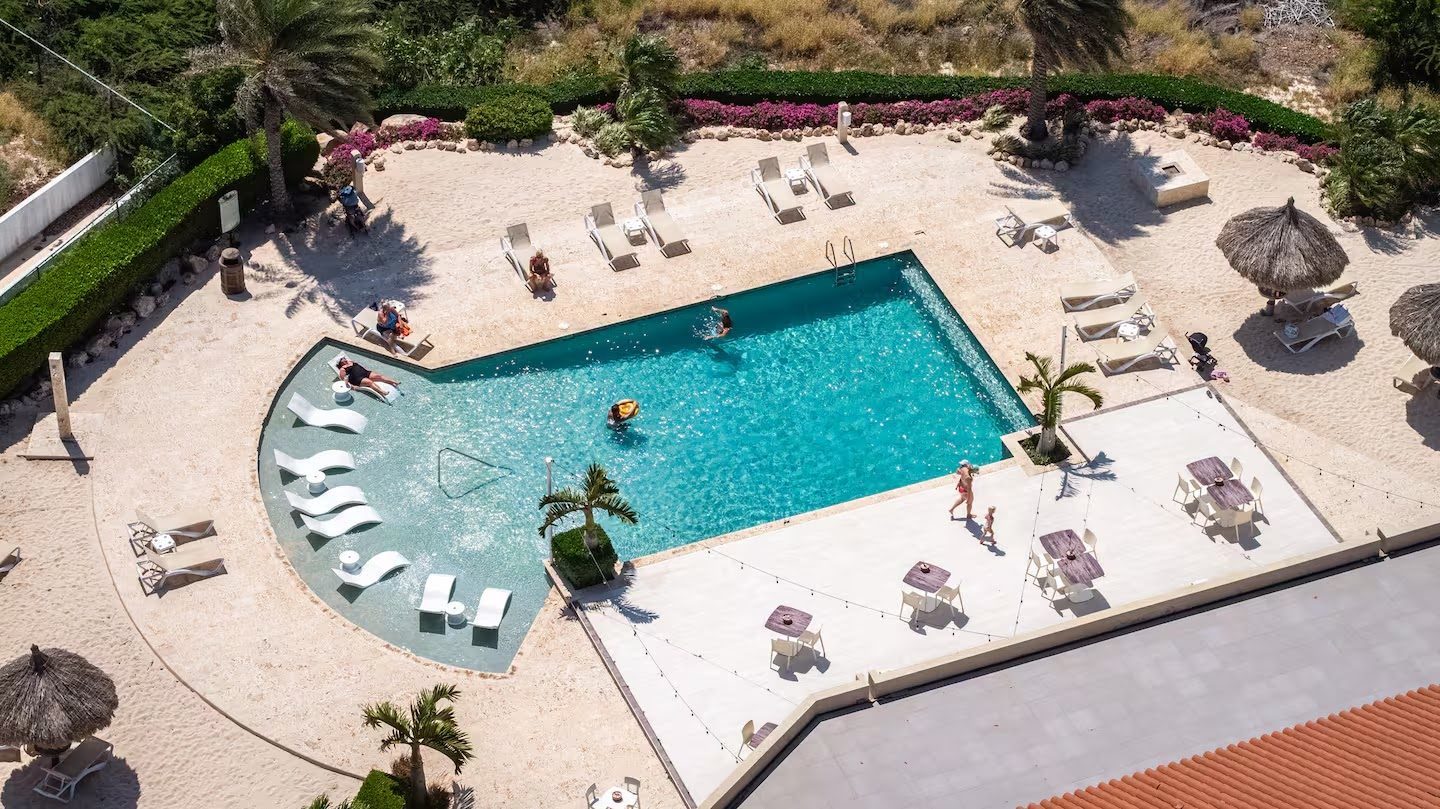
Ocean View 2BR
Sea view from your bed, rooftop pool at The Cove From $210 per night, direct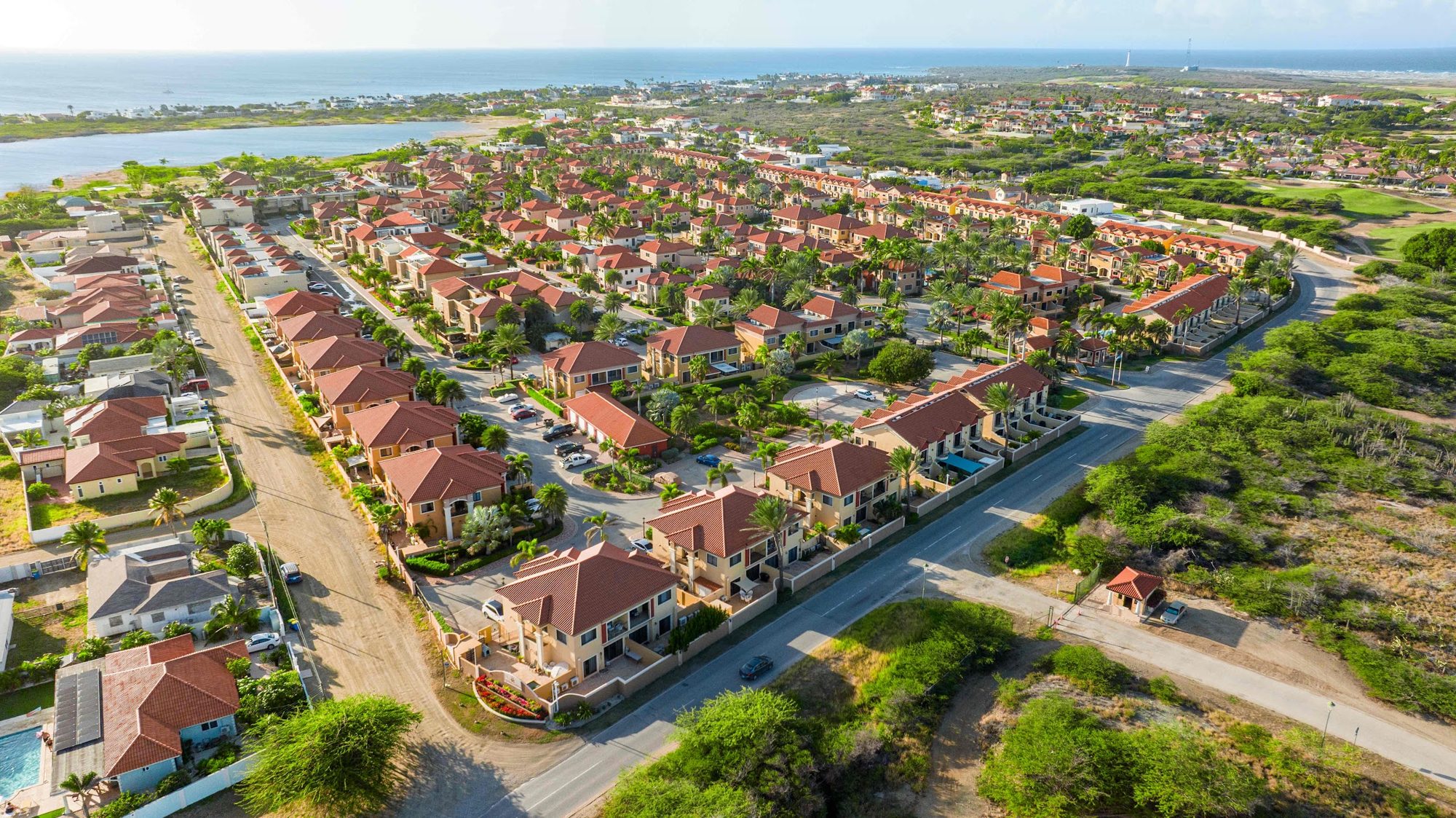 Gated community
Oasis Hideaway
Three pools, gym and tennis inside the gates From $110 per night, direct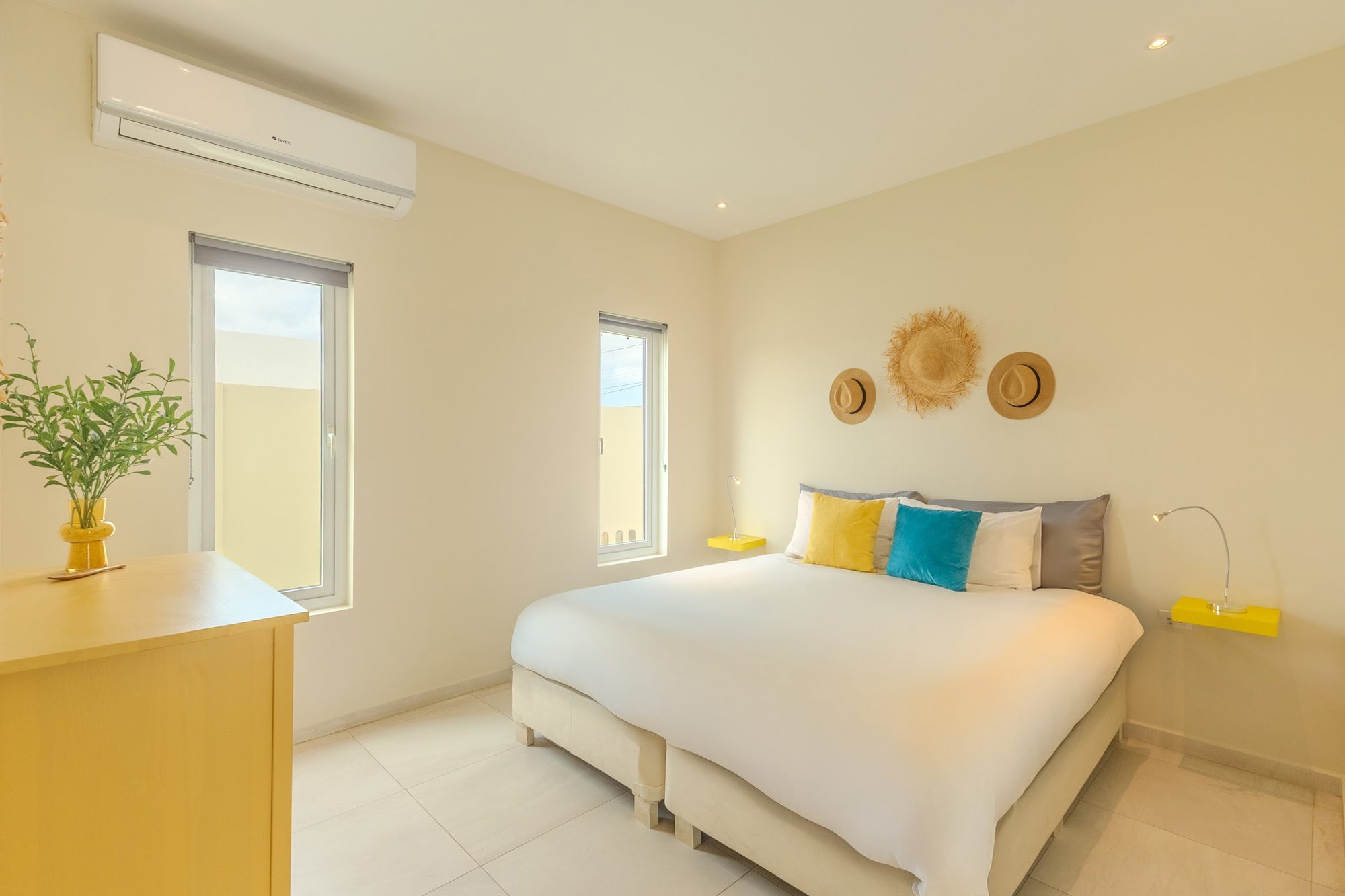 Saltwater pool
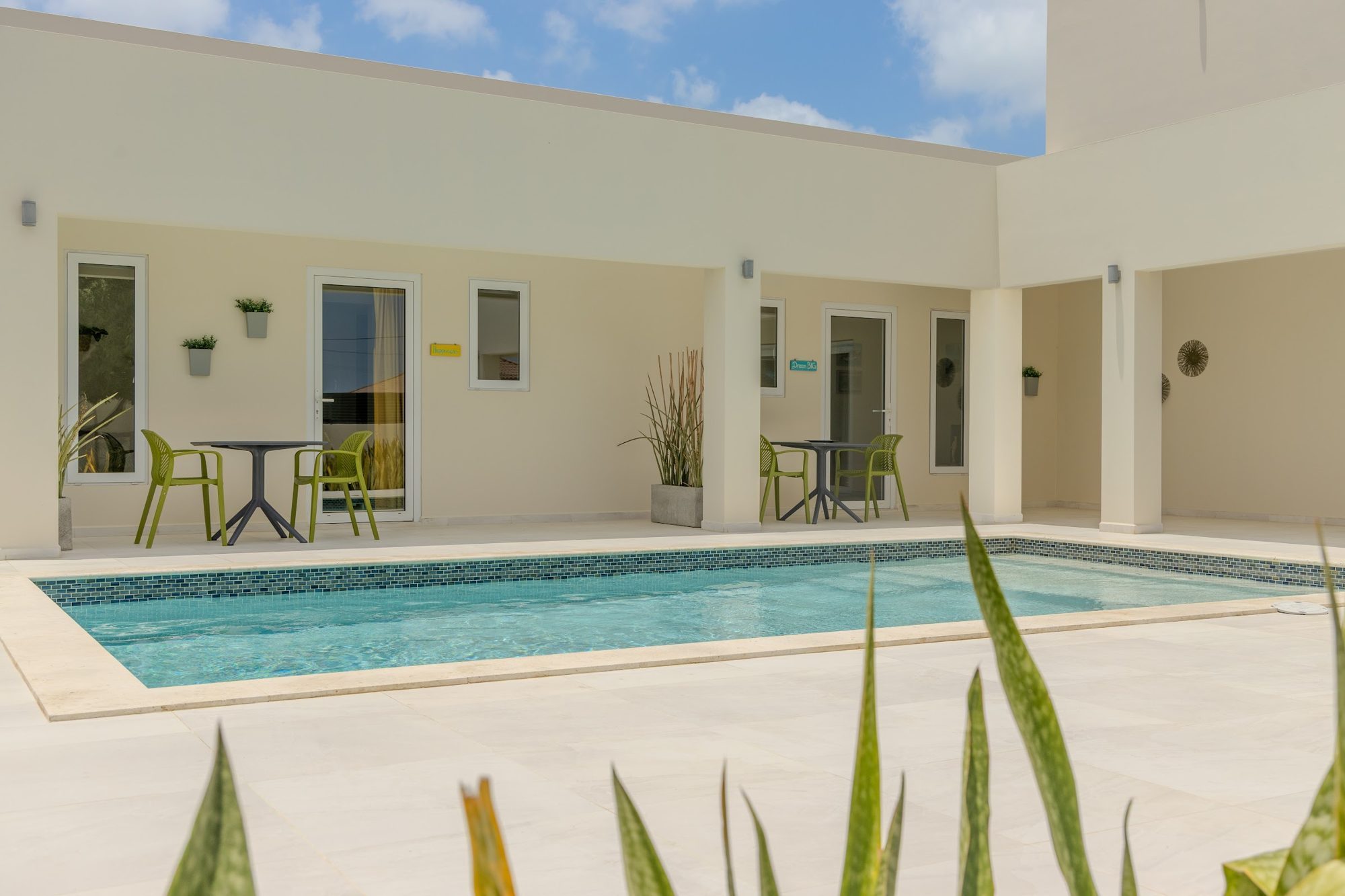
Hideout Dream Big Suite
Adults only, private patio onto the pool garden From $99 per night, direct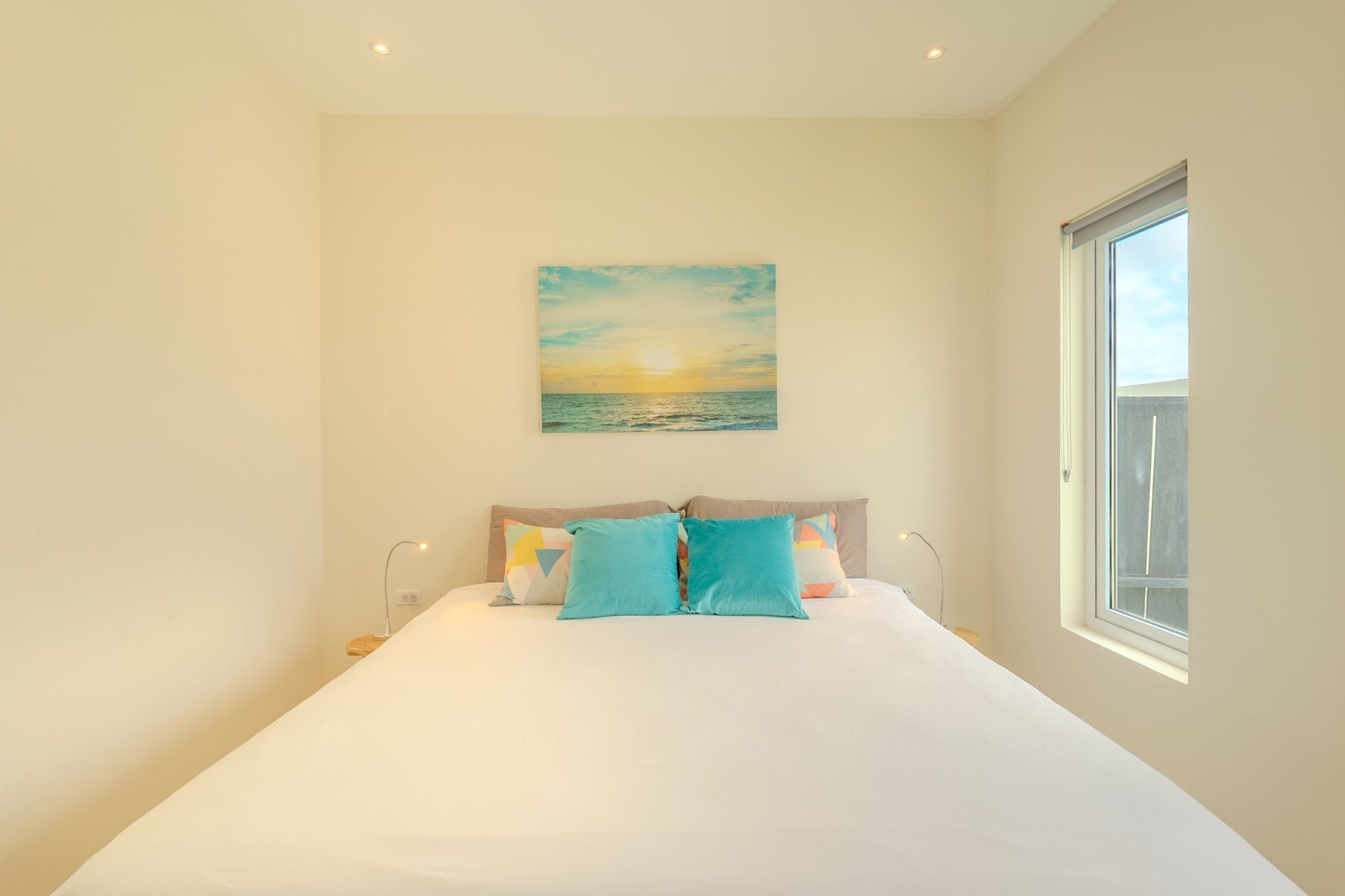 Pool view
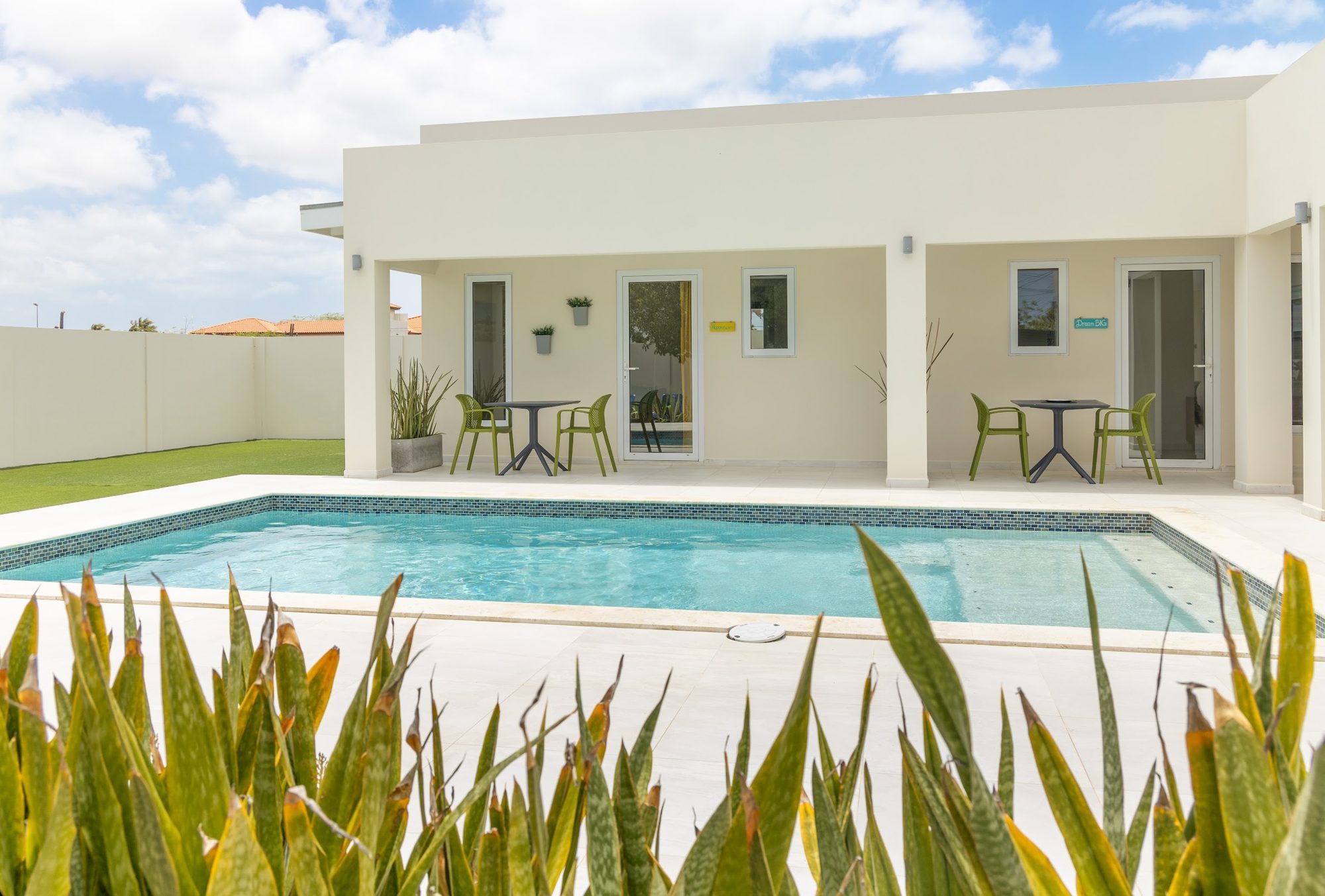
Hideout Happiness Suite
Private patio with pool view From $99 per night, directMore on practical.
Aruba Airport Guide: Arrival, Taxis and US Preclearance
Aruba airport explained by a local host: arrival timing, official taxi rates to Palm Beach and Eagle Beach, rental desks, and why US flights need three hours.
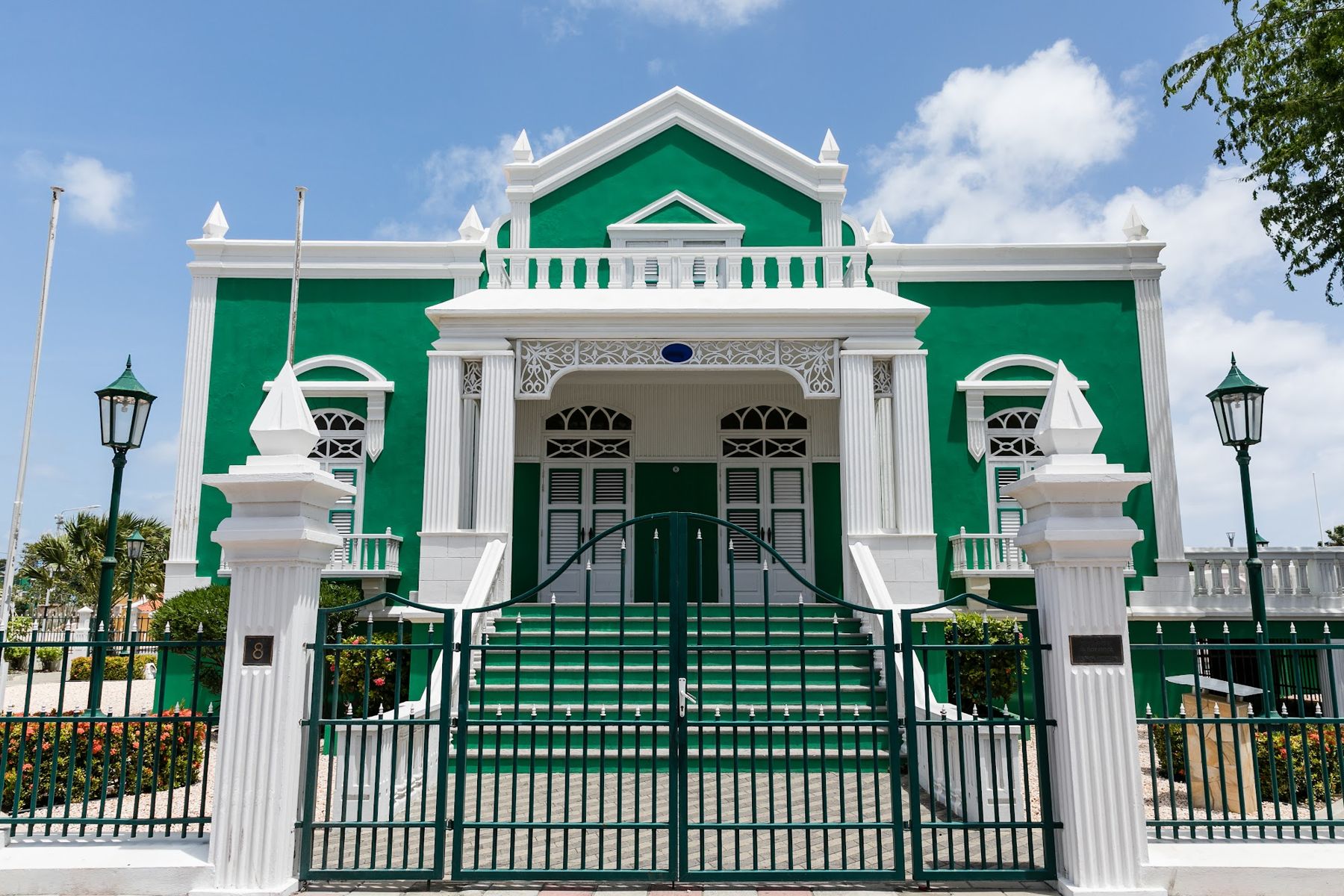
Aruba Cruise Port: Nearest Beaches and a Day Plan
Aruba cruise port guide from a local host: the walk to Surfside Beach, taxi and bus to Eagle Beach and Palm Beach, the free tram and a half day plan that works.
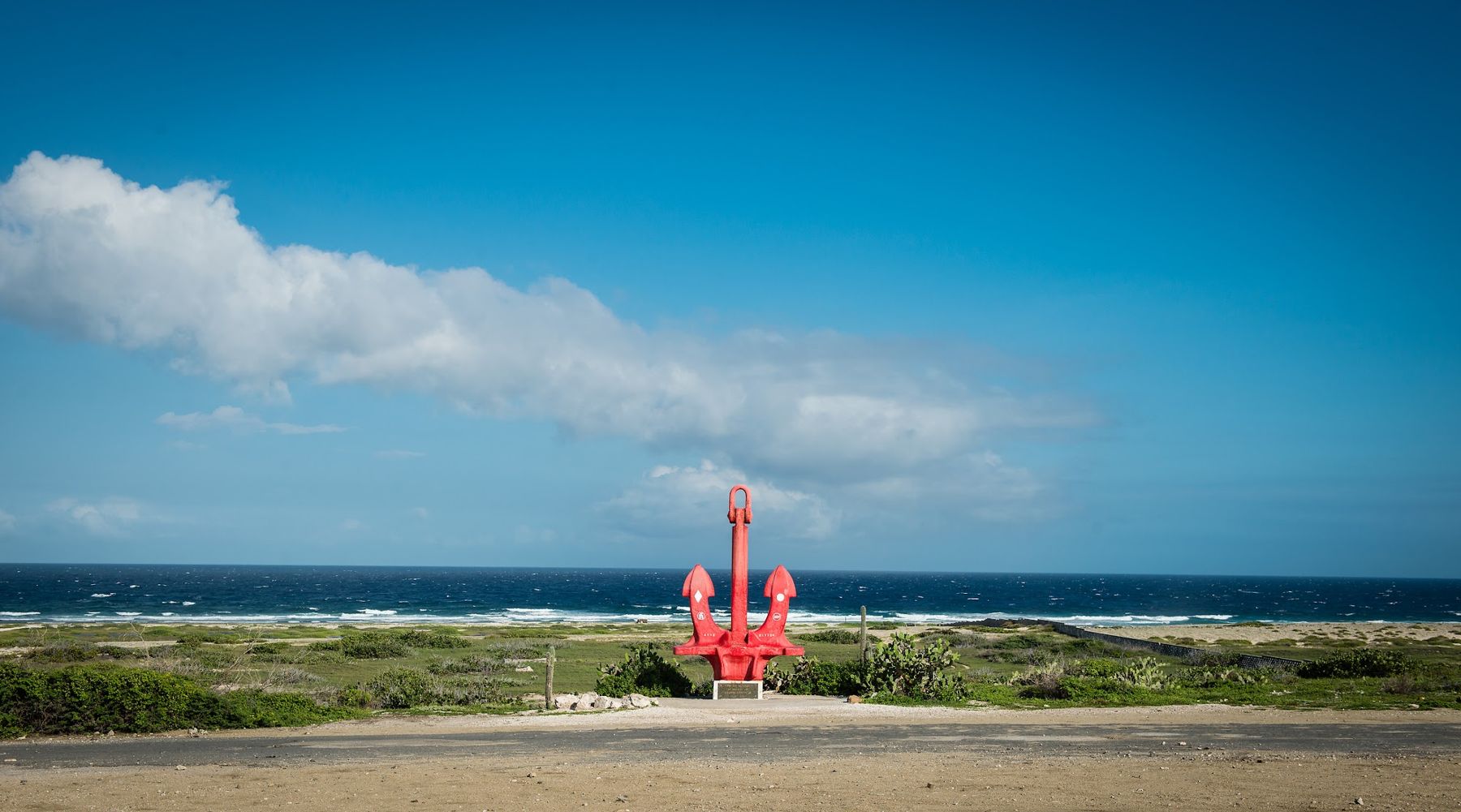
Aruba Hurricane Season: What Actually Happens, by a Host
Aruba hurricane season explained by a local host: the storm record since 1851, what June to November really looks like, rates, sargassum and cancellation terms.