
Aruba ED Card, Sustainability Fee and Entry Rules 2026
Aruba ED card and the $20 sustainability fee explained for 2026: how to apply, who is exempt, passport rules, what you need to fly from the US, airport arrival.
 By Ghislaine de Windt, your host in Noord · 6 min read · Updated October 2026
Arriving on Aruba is easy, but there are two online steps before you fly that trip people up every week: the Aruba ED card and the sustainability fee. Both are quick, both are mandatory, and both have rules that are worth knowing. This is the 2026 version as we explain it to guests the week before they travel.
Step one: the Aruba ED card
Every visitor completes an online Embarkation and Disembarkation card before departure, at edcardaruba.aw. One per traveller, including children. You need:
- Passport details
- Flight numbers in and out
- Where you are staying (our address goes here; it is in your booking confirmation)
- Health and customs declarations
It takes about ten minutes. You can do it as soon as you have flights, and it must be done before airline check in; airlines will ask to see the approval before they let you board. The approval arrives by email. Print it or keep it on your phone.
If you make a mistake after submitting, you cannot edit; you create a new card. Do it carefully and copy your passport number from the passport, not from memory.
Step two: the Aruba sustainability fee
Introduced 1 July 2024. $20 per person arriving by air, paid on the ED card platform with Visa, Mastercard or Discover before you fly. Cash on arrival is not accepted. The card is pre authorised when you submit and charged when you cross the border; a receipt comes by email. The money funds the island’s wastewater treatment plants, which, as our guests from the Netherlands will tell you, is a reasonable thing to fund.
Who does not pay:
- Children under 8
- Cruise ship passengers (they pay differently)
- Aruba residents
- Anyone who already paid in the same calendar year, tracked by passport number
- Aruban students abroad who were resident in the last eight years
Each traveller pays separately on their own ED card; there is no family payment. If your trip is cancelled, refunds take a few days.
What might change: the proposed $25 fee
In September 2026 the government published a draft tourism plan for 2026 to 2031 that includes a separate $25 Sustainable Tourism and Resilience Fee for overnight visitors, with implementation pencilled in from 2027. As of October 2026 it is a proposal that still needs legislation. It is not a rise of the $20 fee to $25; if adopted as drafted, both would apply. We will update this page when it becomes law. Until then, budget $20 per adult and check before you travel in 2027.
Do you need a passport for Aruba? Passports and visas
Yes. US, Canadian, UK, EU and Dutch citizens need a valid passport and no visa for tourist stays up to 30 days, extendable at immigration to 180 days for most nationalities. Your passport should be valid for the length of your stay; six months validity is not a requirement for Aruba, but your airline may apply its own rule, so check. Travellers from other countries can check the list on aruba.com or with the Dutch embassy; Aruba follows the Kingdom of the Netherlands visa policy with local exceptions.
Immigration may ask for a return ticket and proof of accommodation. Your ED card approval covers the second.
What do I need to travel to Aruba from the US?
Four things: a valid passport, the approved ED card, the sustainability fee paid, and in theory a return ticket. No visa, no vaccination requirement, no test. Flights from the US east coast take three to four hours, and because of US pre clearance on the way home, the return feels like a domestic flight.
Arrival at Queen Beatrix Airport
Immigration is quick in the mornings and slow between 2 and 5 pm when the US flights land together. Have your passport and ED card ready. After immigration you collect bags, pass customs (duty free allowance is the usual bottle of spirits and a carton of cigarettes per adult; no fresh meat, fruit or plants), and exit to the arrivals hall.
Outside: the taxi stand with fixed government rates ($41 to Palm Beach, $37 to Eagle Beach, $34 to Noord, $26 to Oranjestad, plus $5 on Sundays, holidays and between 11 pm and 7 am), the rental car desks, and tour company coaches. Our homes are 15 to 25 minutes from the airport. Ghislaine sends arrival instructions and the door code the day before.
Departing to the US, note the US pre clearance: you go through US immigration and customs in Aruba, which means arriving at the airport two and a half to three hours before a US flight, not ninety minutes.
Money, SIM and the rest
- Currency: the Aruban florin (AWG), fixed at 1.79 to the US dollar. Dollars are accepted everywhere; you will get change in florins at local places. Cards work almost everywhere except fish shacks and snack bars. ATMs dispense both.
- Phones: US carriers often include Aruba in Caribbean plans; check. Local SIMs from Setar or Digicel at the airport or in Palm Beach are cheap. Our homes have fast WiFi.
- Power: 127 volts, 60 Hz, US style plugs. US devices work as is. Dutch and EU devices need a plug adapter, and anything without a 110 to 240 volt range (some hair dryers) will not like it.
- Water: tap water is desalinated and among the best in the Caribbean. Do not buy bottled.
- Time: Atlantic Standard Time all year, no daylight saving. Same as New York in summer, one hour ahead in winter.
- Language: Papiamento, Dutch, English and Spanish, in roughly that order at home and the reverse in shops. Everyone you meet speaks English.
A pre departure checklist
- ED card done for each traveller, approval saved on phone.
- Sustainability fee paid, receipt saved.
- Passport valid for the stay, airline rule checked.
- Car rental or taxi decided (read our car guide).
- Our address and door code from the confirmation email.
- Reef safe sunscreen packed; the island is strict about it on tours.
Stay nearby
All four of our homes are registered rentals that charge the local tourist levy in the rate you see, nothing added at the door. Ocean View 2BR on Palm Beach, the Hideout Dream Big Suite and Hideout Happiness Suite near Eagle Beach, and Oasis Hideaway in Gold Coast are each 15 to 25 minutes from the airport. See them at /stays/.
Questions people ask
What is the Aruba sustainability fee?
A $20 charge per person arriving by air, paid online through the ED card before check in. Introduced 1 July 2024, it funds the island's wastewater treatment. Cruise passengers and children under 8 are exempt.
Do I pay the Aruba sustainability fee every time I visit?
Once per calendar year per passport. If you visited in March and come back in November, the system recognises your passport number and does not charge again. A new year means a new fee.
What is the ED card for Aruba?
The online Embarkation and Disembarkation card every visitor completes before travel at edcardaruba.aw. It takes about ten minutes, asks for passport, flight and accommodation details, and is where you pay the sustainability fee.
Do Americans need a passport for Aruba?
Yes, a valid passport. US, Canadian and EU citizens do not need a visa for stays up to 30 days, extendable to 180 for most. Dutch citizens are visa free as well.
Is Aruba adding a new tourist tax?
A $25 Sustainable Tourism and Resilience Fee for overnight visitors is proposed in the island's 2026 to 2031 tourism plan, with a possible start in 2027. As of October 2026 it is a proposal, not law, and it would be on top of the $20 fee.
Stay nearby.
All stays Rooftop pool 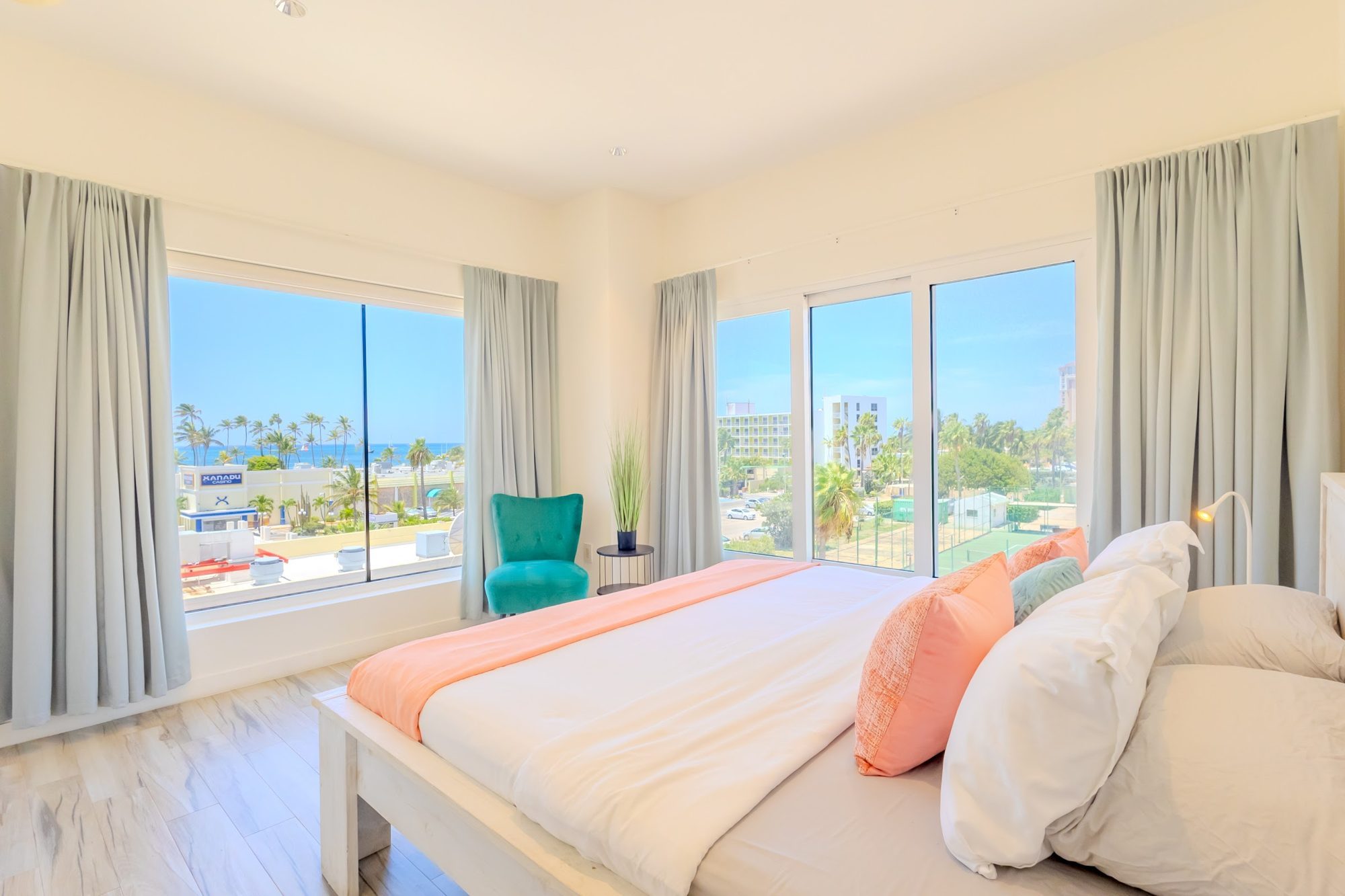
Ocean View 2BR
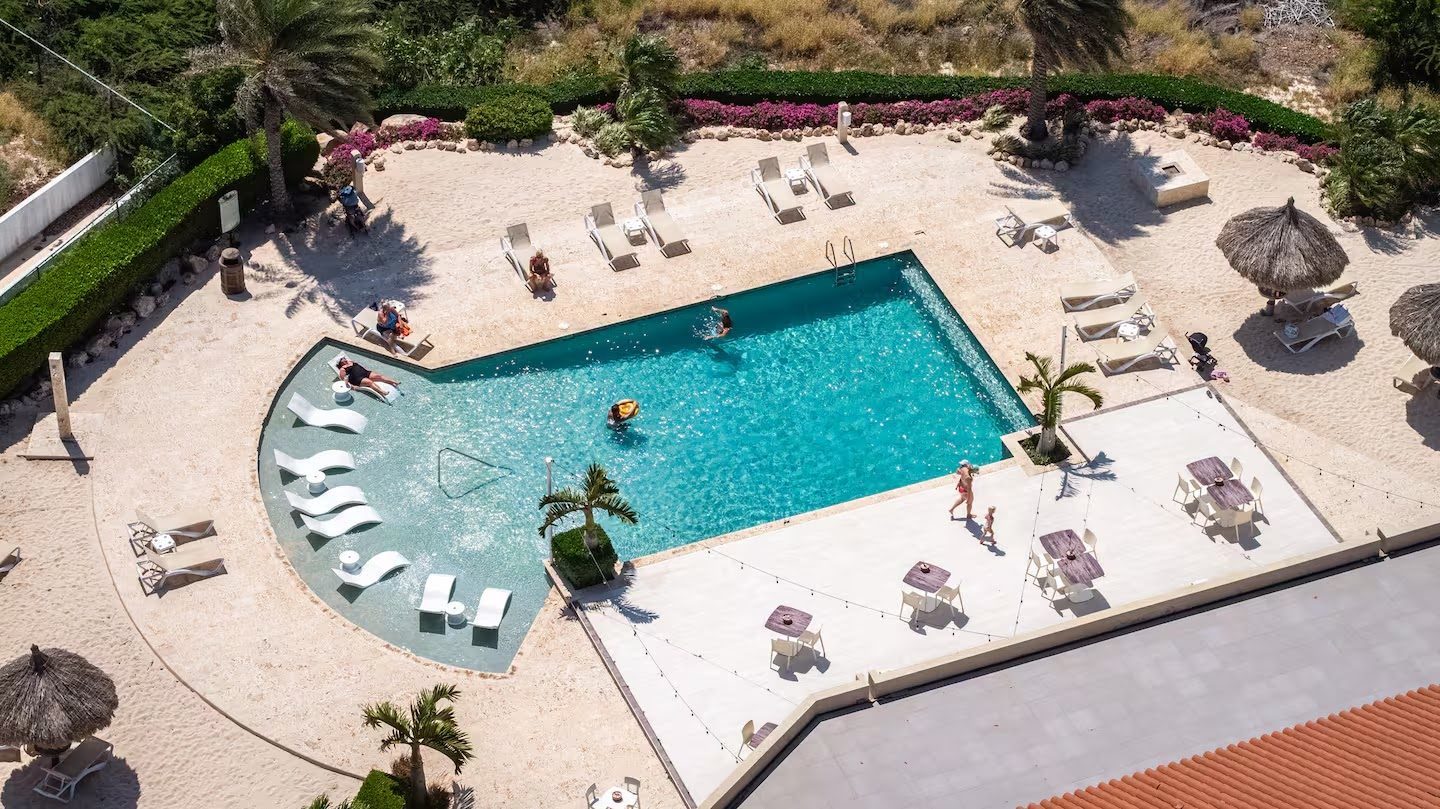
Sea view from your bed, rooftop pool at The Cove From $210 per night, direct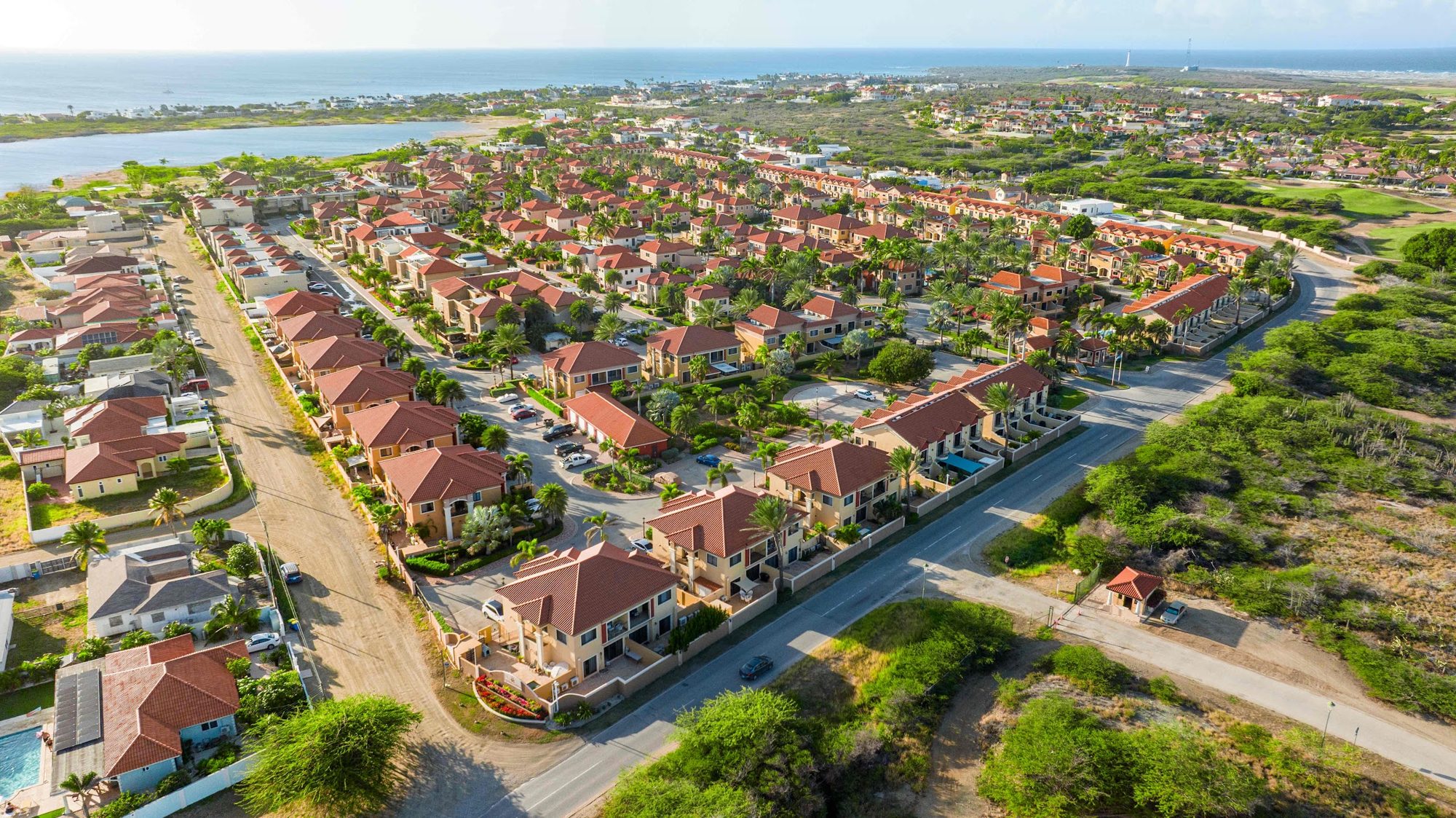 Gated community
Oasis Hideaway
Three pools, gym and tennis inside the gates From $110 per night, direct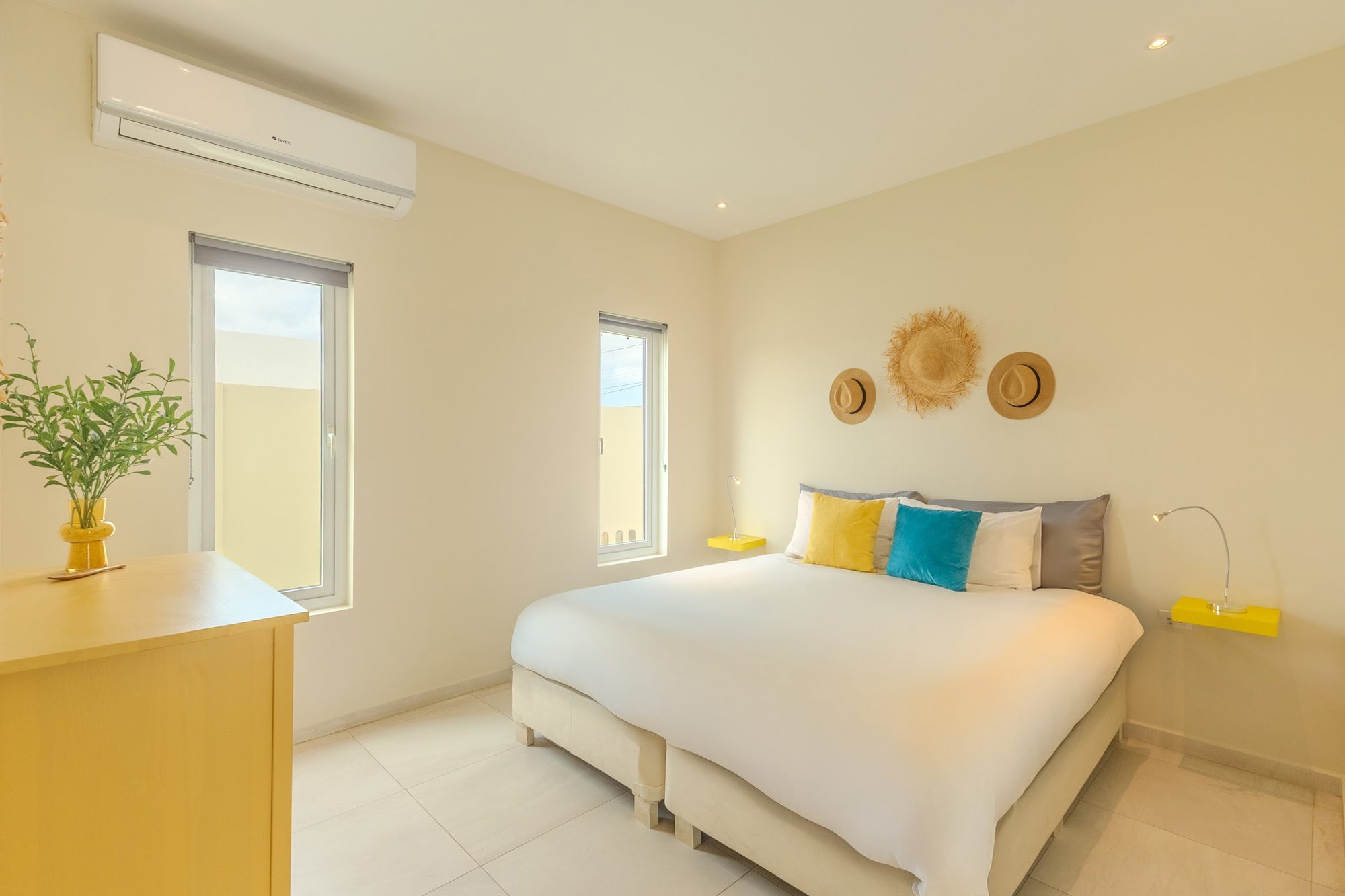 Saltwater pool
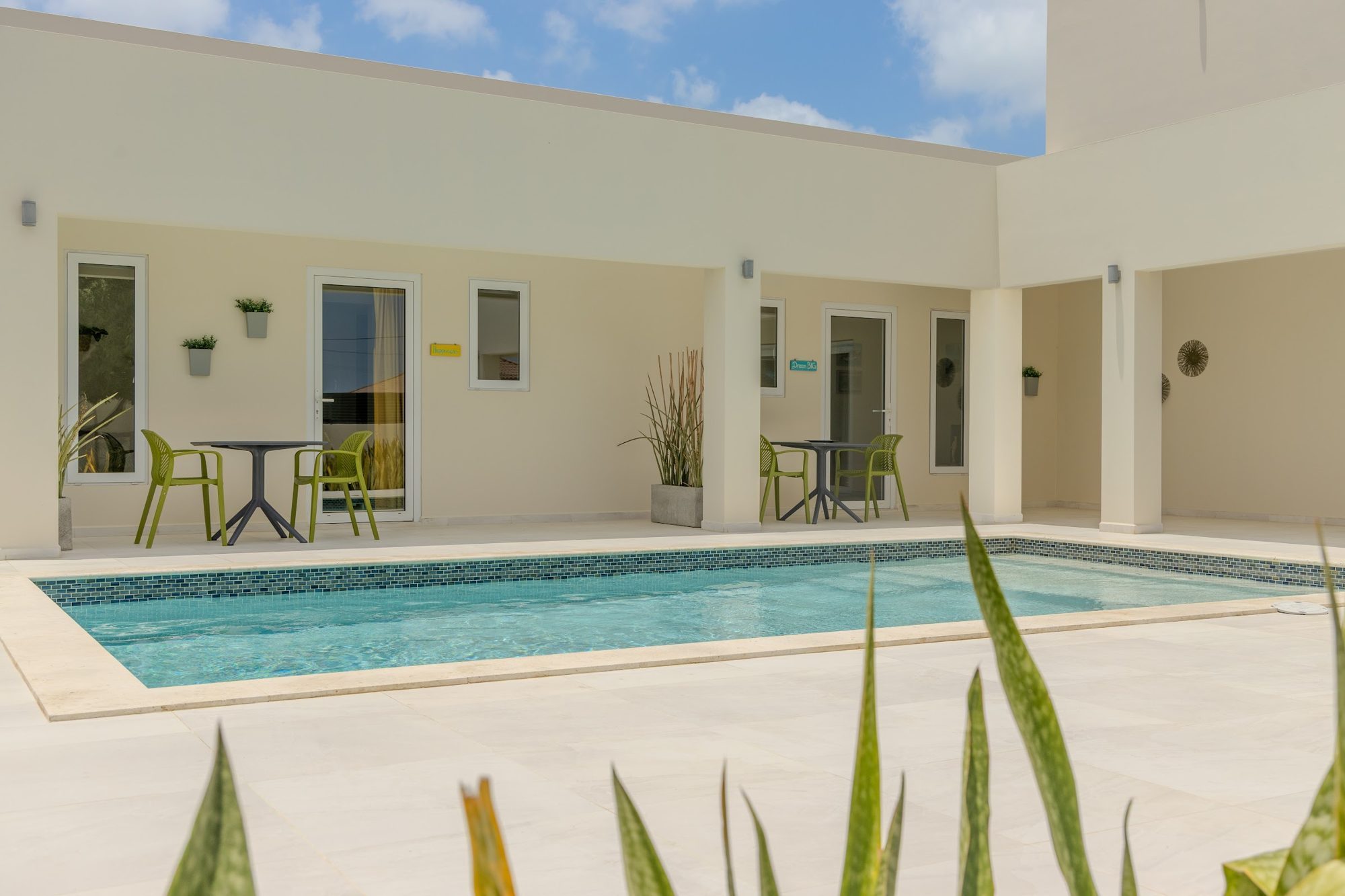
Hideout Dream Big Suite
Adults only, private patio onto the pool garden From $99 per night, direct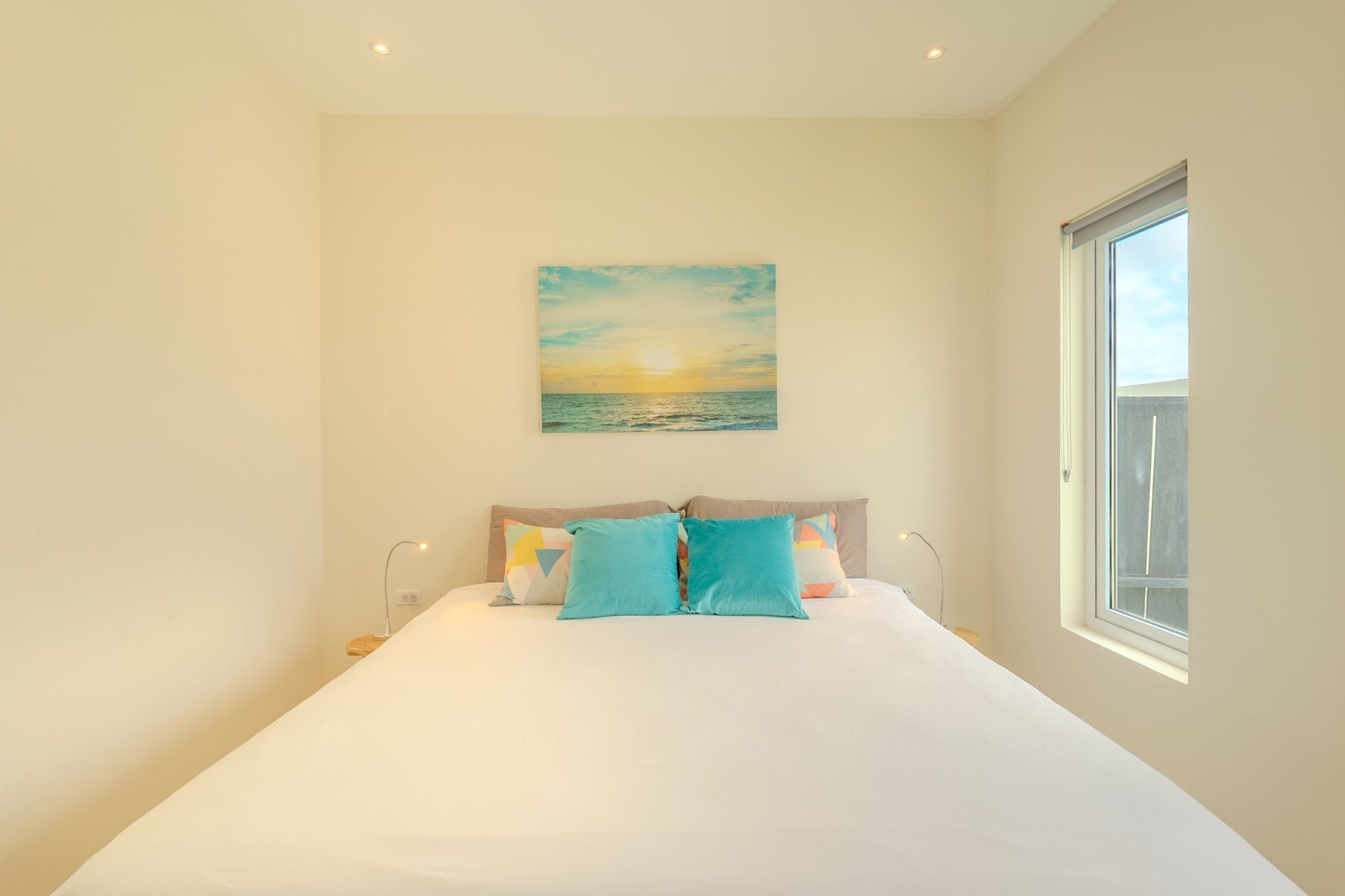 Pool view
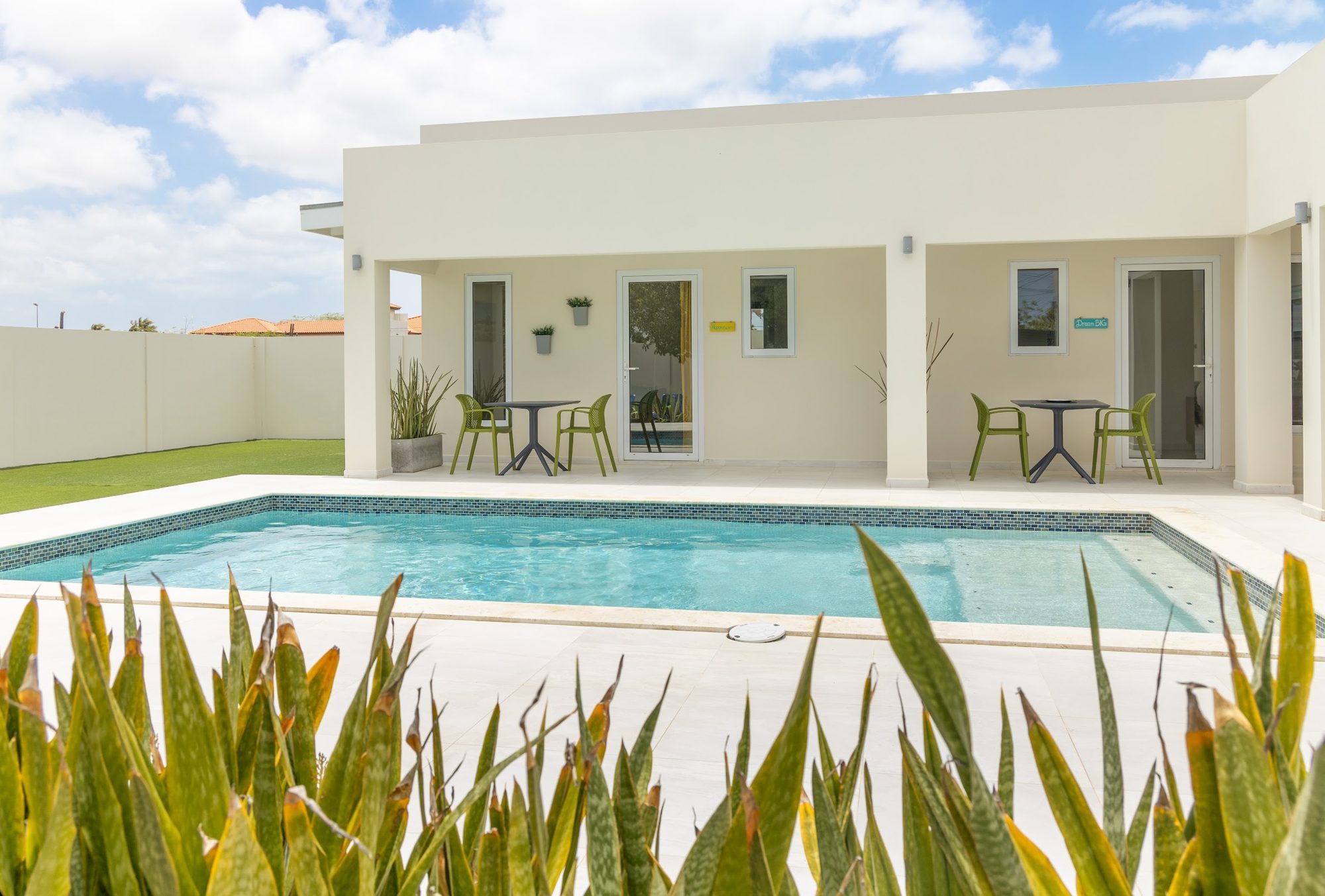
Hideout Happiness Suite
Private patio with pool view From $99 per night, directMore on practical.
Aruba Airport Guide: Arrival, Taxis and US Preclearance
Aruba airport explained by a local host: arrival timing, official taxi rates to Palm Beach and Eagle Beach, rental desks, and why US flights need three hours.
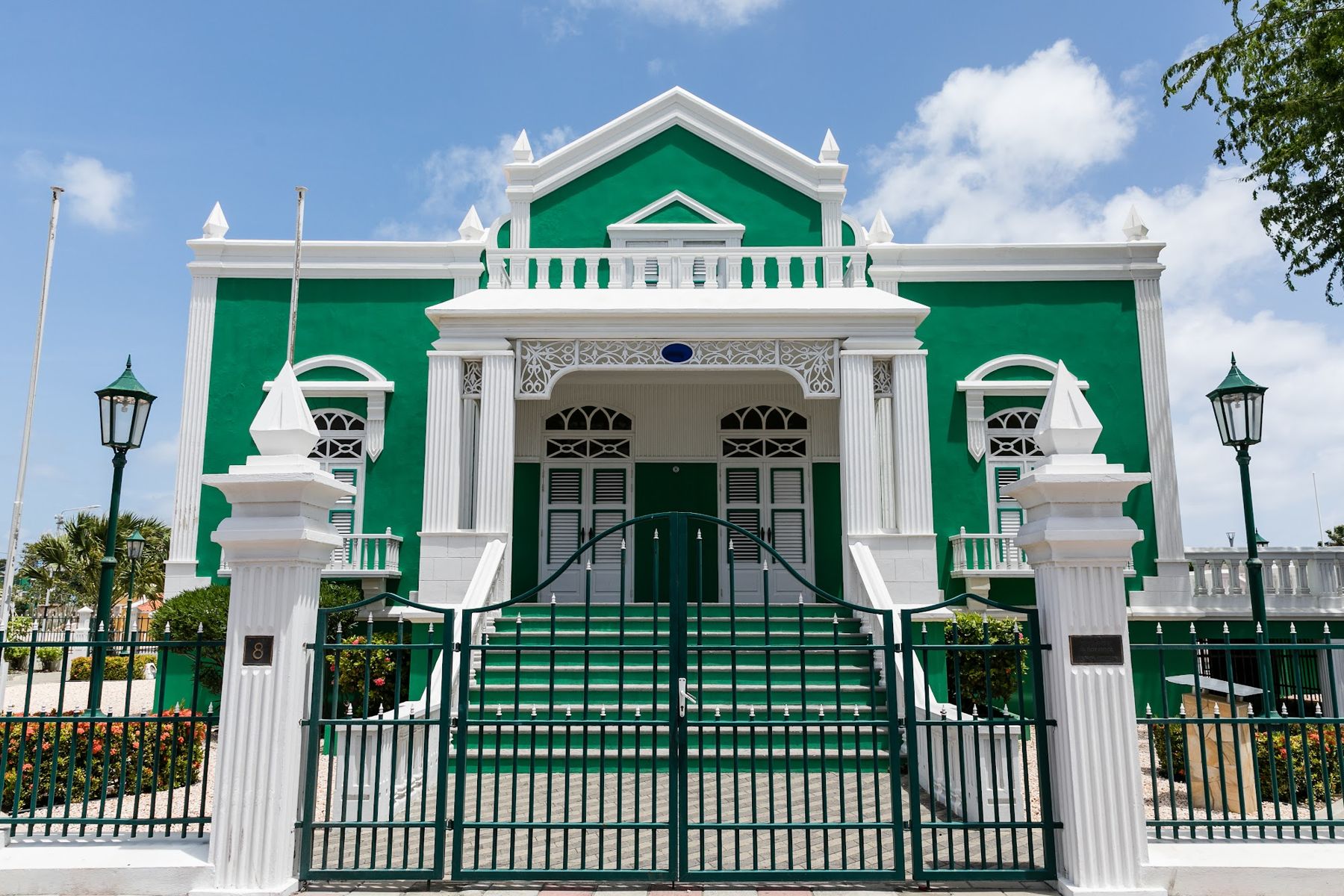
Aruba Cruise Port: Nearest Beaches and a Day Plan
Aruba cruise port guide from a local host: the walk to Surfside Beach, taxi and bus to Eagle Beach and Palm Beach, the free tram and a half day plan that works.
Aruba Currency: Florins, Dollars, Cards and ATMs
Aruba currency explained by a local host: the florin, the fixed 1.79 rate, where US dollars work, cash only places, ATMs, cards, service charges and tipping.